It is no longer surprising to hear Morocco mentioned in the late stages of FIFA tournaments. After years of work and planning, their presence, at senior and youth levels alike, has come to herald a genuine footballing renaissance. Morocco’s U-20 side are continuing to break boundaries by earning a spot in the final of the FIFA U-20 World Cup Chile 2025™ after a magnificent run that saw them topple several top teams along the way.
In truth, Moroccan brilliance at FIFA tournaments is not a recent phenomenon – 20 years ago, another generation made history when Fathi Jamal led the Atlas Cubs to the semi-finals of the 2005 FIFA U-20 World Cup in the Netherlands.
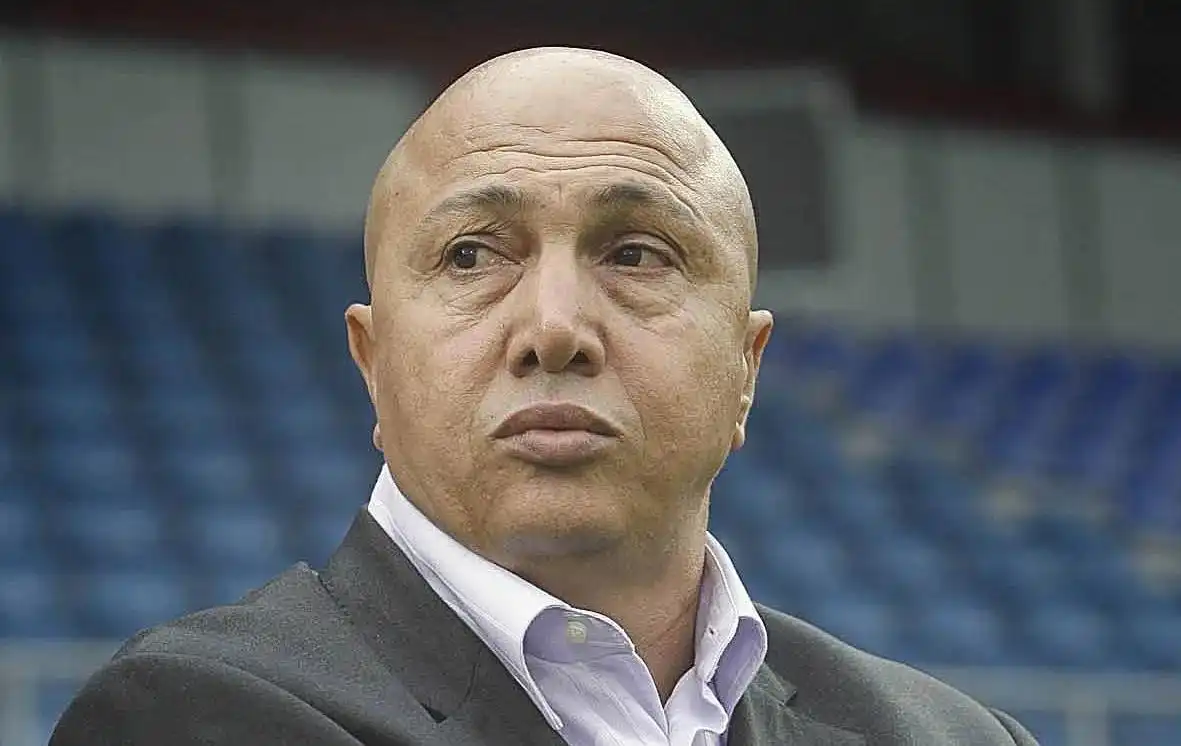
Now director of technical development at the Royal Moroccan Football Federation, Jamal is considered one of Morocco’s finest coaches, not only because of his achievements in that 2005 tournament but also for his knack for spotting talent and inspiring every club he has managed to play beautiful, entertaining football.
In this exclusive interview with FIFA, Jamal reflects on his memories with the 2005 squad, assesses his current team’s journey and delivers a special message to coach Mohamed Ouahbi and his players ahead of the much-anticipated final.
Fathi Jamal: The common thread between the Chile 2025 and Netherlands 2005 teams is their love for their country and their sincere desire to represent it in the best possible way. Both of these generations are passionate, determined to succeed, tremendously talented and capable of delivering at a high level on the pitch.
As for the difference, it lies in maturity and organisation. The 2005 generation were very talented, but they lacked sufficient guidance and support. Some players struggled with media pressure or chose unsuitable professional paths. This Chile 2025 team, on the other hand, come from a better environment in terms of preparation and training, with strong academies and clear development programmes, as well as a capable technical set-up with continuous support from coaches and administrators.
That is the question that kept me up at night after that generation’s run at the 2005 World Cup. Those players needed real support and guidance after the tournament. They were talented youngsters, but they lacked maturity and guidance, which is why many of them never reached the top.
I remember that the media spotlight was intense at the time. The press were only doing their job, but some players didn’t handle the attention sensibly, and there were some indiscretions. Clubs also didn’t look after them or give them the required structure. Many of them had no one to steer them in the right direction.
For example, some players made poor career decisions. Some moved to big clubs that didn’t give them adequate playing opportunities – like Nabil El Zhar, who went to Liverpool after the World Cup and didn’t get enough minutes, which stalled his development.
As for those who remained in Morocco, they also faced difficulties because their clubs didn’t give them consistent playing time, meaning that only a few managed to build successful football careers. In my opinion, the lack of proper structure after the tournament – plus weak management at the club level – was the main reason a talented generation was lost, one that was capable of offering so much to Moroccan football.
Today we’re seeing significant, tangible progress in the development of football in Morocco, at all levels, whether for men, women or girls. I usually don’t like to personalise things, but it should be recognised that federation president Fouzi Lekjaa is the person who believed in the development of football. He’s the one who put the strategy in place for this work, and today we’re seeing its results at all levels.
The achievements began to pile up in 2021 across both the men’s and women’s game, thanks to groundwork laid just prior to that. But in terms of development, since 2021, there’s been tremendous momentum and impressive results, and today we’re seeing it play out across the national teams: the U-17s, U-20s, U-23s, the Olympic team, the local national team and the senior team, who are now ranked 11th in the world after reaching the World Cup semi-finals and finishing fourth – a truly historic achievement.
We also can’t overlook the major role played by the Mohammed VI Football Academy, a pioneer in this field, where they’ve done remarkable work with young players. We also have other strong academies today, such as AS FAR, FUS Rabat, and RS Berkane, which are some of the clubs that have engaged seriously with this approach. There’s also a national programme for developing young players within clubs, covering 14 clubs, as well as the federal training centres.
The Federation currently has four centres in Morocco: One in Sale, one in Casablanca, one in Ben Guerir and one in Laayoune. We also have promising youth national teams coming up, made up of players born in 2011 (U-15), 2010 (U-16) and 2009 (U-17).
And we mustn’t forget the tremendous effort made by Moroccans living in Europe who help us discover talent there, in cooperation with the relevant institutions. That is a huge job and a commendable one.
It’s been an outstanding run, and as far as I’m concerned, it’s no fluke. I’ve followed this team closely from the start. I was optimistic they’d deliver at a high level in the World Cup, even after the disappointment at the Africa Cup in Cairo, where they fell short of expectations despite being capable of winning.
But I was confident they’d bounce back at the World Cup, and that’s exactly what happened. They delivered superb performances and reached the final thanks to outstanding teamwork under Mohamed Ouahbi, who deserves huge credit.
My message is to keep calm and focused, just as they’ve done since the start of the tournament. I have a lot of faith in their abilities, and I wish them success in winning the Cup and writing a new page in Moroccan football history.
I think there are some capable of reaching the senior team in the future, but we have to be objective – they’re still young and have a lot of maturing and developing ahead of them. The main goal is to see a significant number of them representing Morocco at World Cup 2030, and I’m confident that will happen.