The countdown has already begun. In June of next year, Brazil will play host to the FIFA Women’s World Cup™. It will be a historic tournament for both the country, which will welcome the showpiece of women’s football for the first time, as well as for the competition itself, with a record 32 teams set to compete for the trophy.
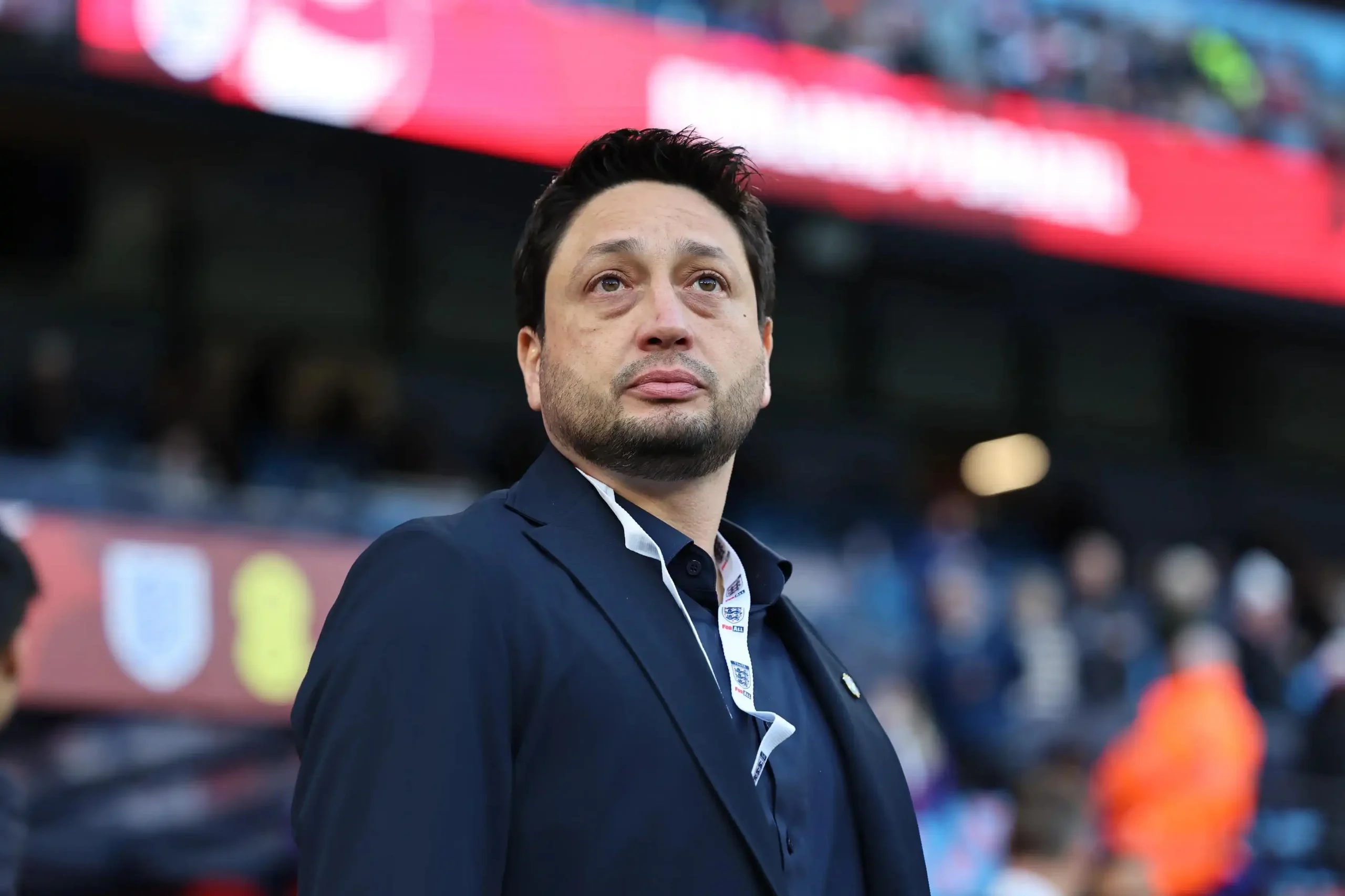
With anticipation growing off the pitch, Brazil is increasingly hopeful for success on it. Arthur Elias, the head coach of Brazil’s women’s team, spoke exclusively to FIFA about the tournament, the current state of his team following their victory in the Copa América Feminina and their silver medal at the Paris 2024 Olympics.
Arthur Elias: For us, it’s a great honour to host the World Cup, knowing how South American football is developing and especially in women’s football. Without a doubt, this World Cup is going to accelerate this development, inspiring a new generation of girls across South America who will be able to see the quality of women’s football up close.
Brazil has excellent stadiums and great infrastructure, and I am certain that we will put on the best World Cup ever, because each edition of the Women’s World Cup has evolved dramatically from the previous. I’m also confident that 2027 will be remembered as a landmark year for women’s football, not just in Brazil but across all of South America.
Firstly, because Brazil deserves it for everything we have achieved in women’s football. We’ve produced some of the best players in history. Also thanks to the growing development we have seen in our country since 2019, there has been greater recognition of women’s football. We have a generation of highly skilled players who I really believe in. South American football as a whole is also coming on leaps and bounds, with Colombia making their mark, and some others too.
There is still a long way to go but the players fight hard and wear their country’s shirt with pride. FIFA’s decision to consistently give each continent the chance to host the World Cup is important to ensure that women’s football remains competitive everywhere and that it does not become concentrated in any single area. I can confidently say that this is the right time to bring the World Cup to Brazil and South America.
As women’s football continues to develop, it’s only natural that FIFA would choose to include more countries. Having a national team compete in the World Cup undoubtedly drives support and development. It inspires younger generations in every competing nation and makes the qualifying and pre-tournament matches more competitive and intense. So I think this change will benefit women’s football in many countries, and it will make the tournament even more unpredictable as there are plenty of teams capable of lifting the World Cup.
It’s a big responsibility, I’m well aware of that. But it’s a responsibility I share with everyone, to develop women’s football and to leave a lasting legacy both on and off the pitch. I think doing that is very important. Obviously, it’s my job to work every day and to give my best to every player in the running to play for Brazil, to improve our squad’s consistency and to help us become all the more unpredictable for our rivals, while ensuring our players feel comfortable in their roles within the team’s structure. Of course, we also want to leave a legacy off the pitch.
Our country is one that, unfortunately, has alarming levels of violence against women. Brazil also has a history of limited support for women’s football, and although it may have improved in recent years, there is a history of a lack of opportunities for women in the workplace. With this World Cup, we have the chance to leave a social legacy and to help move towards greater equality and equal working conditions in football, as well as raising awareness about issues such as domestic violence. I am very optimistic that we can achieve our goals on the pitch and I really hope we can do the same off it.
Those were two very different situations. Brazil made it to different stages in those tournaments, but at least in both we went quite far. Playing at home, in 1950 we made it to the final, but in 2014, our semi-final elimination was devastating. I believe the most important lesson is that playing in our own country, with passionate support for the team, is an advantage that increases our chances of getting to the latter part of the competition.
Of course, when you reach the knockout stages, the squad needs to be fully prepared, understanding what to do and how to play against each team. I am very pleased with the work we have been doing. I have confidence in every player when they work as a group and I believe we can get the best out of each and every one, making the most of the different options we have been working on as a team. These will all be crucial weapons in our do-or-die games. Obviously, we are hoping to lift the trophy at the end of the tournament, but we are very conscious of the high level of football we will be up against.
For me, it’s an honour. It’s a once-in-a-lifetime opportunity for any coach to work with the best player of all time. Very few coaches get that sort of privilege.
After many years of working in women’s football, I’ve been lucky to work with Marta while she is still performing at a high level, even though she is towards the end of her career. She was part of the squad at the (Paris 2024) Olympics and at the Copa América, and she continues to be a valuable part of the Brazilian team, just as she always has been. My relationship with her is very positive and very honest.
Beyond the professional side of things, we have developed a deep friendship and a strong sense of loyalty to achieving our ambitions with the Seleção. Marta has been especially supportive of the younger players, making sure everyone feels comfortable within the setup. I always tell my training groups that we need to foster understanding and cooperation with everyone, and Marta has been fantastic in supporting that, so working with her has been very rewarding. Perhaps it has benefitted me more than her, but I know that I have contributed to her experience with the Seleção and that is something that has certainly been a defining part of my career.