Since its first edition, the FIFA World Cup™ is often viewed through a lens of European and South American domination. However, behind these eras of glory, Asian teams have gradually carved out their own chapter – through historic debuts, unexpected victories and achievements that have slowly shifted global perceptions of football in the region.
From their first appearance in the pre-Second World War era to a series of surprises in the 21st century, Asia has become an integral part of the World Cup journey, defined by a style unlike any other. FIFA looks back at the finest moments that mark the journey of Asia’s representatives.
1938: Asia’s first steps on the world stage
The 1938 FIFA World Cup™ in France marked a milestone that often escapes global memory. For the first time, Asia was represented in the global finals via the Dutch East Indies, now known as Indonesia. Their presence wasn’t just about taking part. Instead, it represented an early sign of Asia’s involvement in the world’s top football competition, at a time when intercontinental travel was still a major challenge.
The Dutch East Indies, led by coach Johan Mastenbroek, faced a significant test in the knockout stage, losing 6-0 to Hungary, at that time one of Europe’s major powers. Even though they only played one match, their presence is permanently recorded in FIFA’s history as the first Asian representatives at the World Cup.
1966: DPR Korea shock the world
Almost three decades after Asia’s debut, the 1966 World Cup in England became a stage for one of the most iconic stories in the tournament’s history. DPR Korea, who at that time were virtually unknown on the global football map, arrived as the absolute underdog. However, on a historic night in Middlesbrough, they defeated Italy 1-0 thanks to a goal by Pak Doo-Ik, a result that shook the football world.
That victory made DPR Korea the first Asian team to reach the quarter-final stage. Even when facing Portugal in the last eight, they had a 3-0 lead before eventually losing 5-3 to the Eusebio-led team.
1994: Saudi Arabia’s debut and breakthrough
If ever there was an Asian debut that immediately changed global perceptions, Saudi Arabia at the 1994 World Cup was one of them. Appearing for the first time in the USA, Saudi Arabia advanced through the group stage to the round 16, an impressive step for an Asian debutant at the time.
That journey was capped by Saeed Al-Owairan’s legendary goal against Belgium – a solo run which has since been ranked among the best goals in the World Cup’s history.
2002: Asia’s best showing
The 2002 World Cup, which Korea Republic and Japan co-hosted, became the greatest turning point in the history of Asian football. As a host, Korea Republic exceeded all expectations by eliminating Italy and Spain in the knockout stage before ultimately reaching the semi-finals.
This made them the best performing Asian team in World Cup history, a record that still stands today. 2002 was another significant milestone as it marked the first time the FIFA World Cup was staged in Asia, strengthening the continent’s position on the global football stage.
2018: Korea Republic send defending champions home
At Russia 2018, Korea Republic were once again the centre of world attention, this time through a result that had global implications. The 2-0 win over defending champions Germany in the final group stage match was one of the tournament’s most surprising moments.
This result eliminated Germany from the group stage for the first time in their history.
2022: Qatar and the era of Asian records
Qatar 2022 was both a celebration and testament of the progress of Asian football. For the first time, the tournament was held in the Middle East, with Qatar appearing as a debutant host. Moreover, this edition made history when three Asian teams advanced through the group stage – Australia, Japan and Korea Republic.
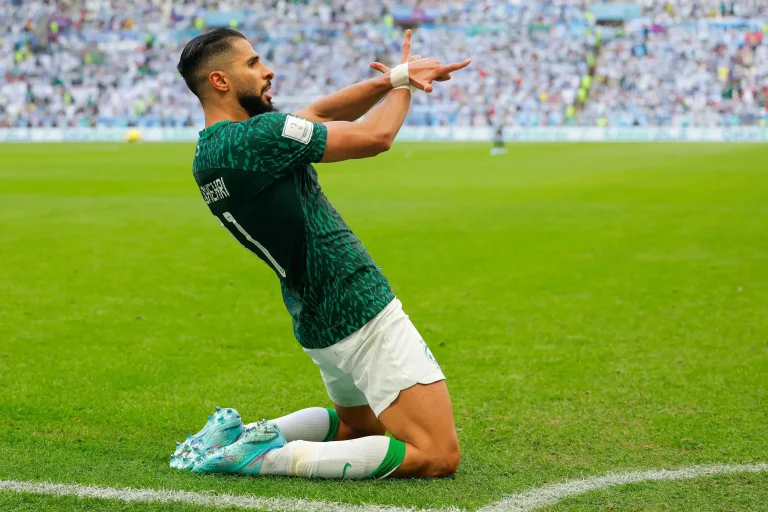
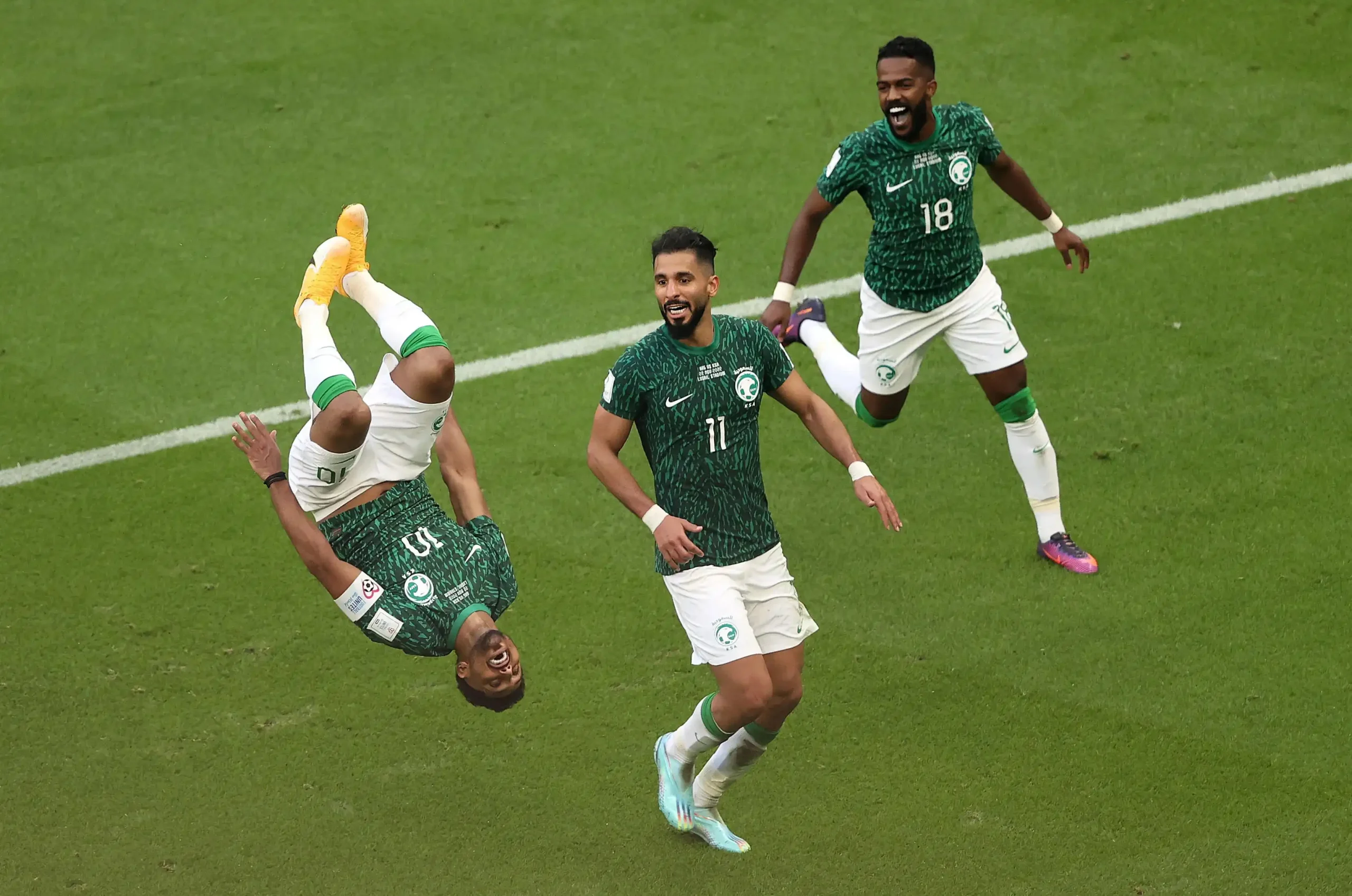
This tournament was full of surprises: Japan defeated Germany and Spain, while Saudi Arabia toppled Argentina, who had arrived with a record of 36 unbeaten international matches before later departing as the world champions.