In major international competitions, many teams are inspired by a star player, often a prolific goalscorer capable of changing the course of a match single-handedly, with the likes of Pele, Cristiano Ronaldo, Zinedine Zidane, Lionel Messi and Kylian Mbappe having proven themselves to be such players.
There is, however, another approach that is rarer and potentially more threatening, one where danger lurks in every area of the pitch and the opponents are left unsure of who to keep tabs on.
Throughout FIFA World Cup™ history, only three teams have truly maximised the use of this strategy: France in 1982, Italy in 2006 and Belgium in 2018. Each of these teams boasted ten different goalscorers during those World Cup campaigns, as FIFA examines, marking them out as well-rounded, unpredictable teams capable of scoring from any position and at any time.
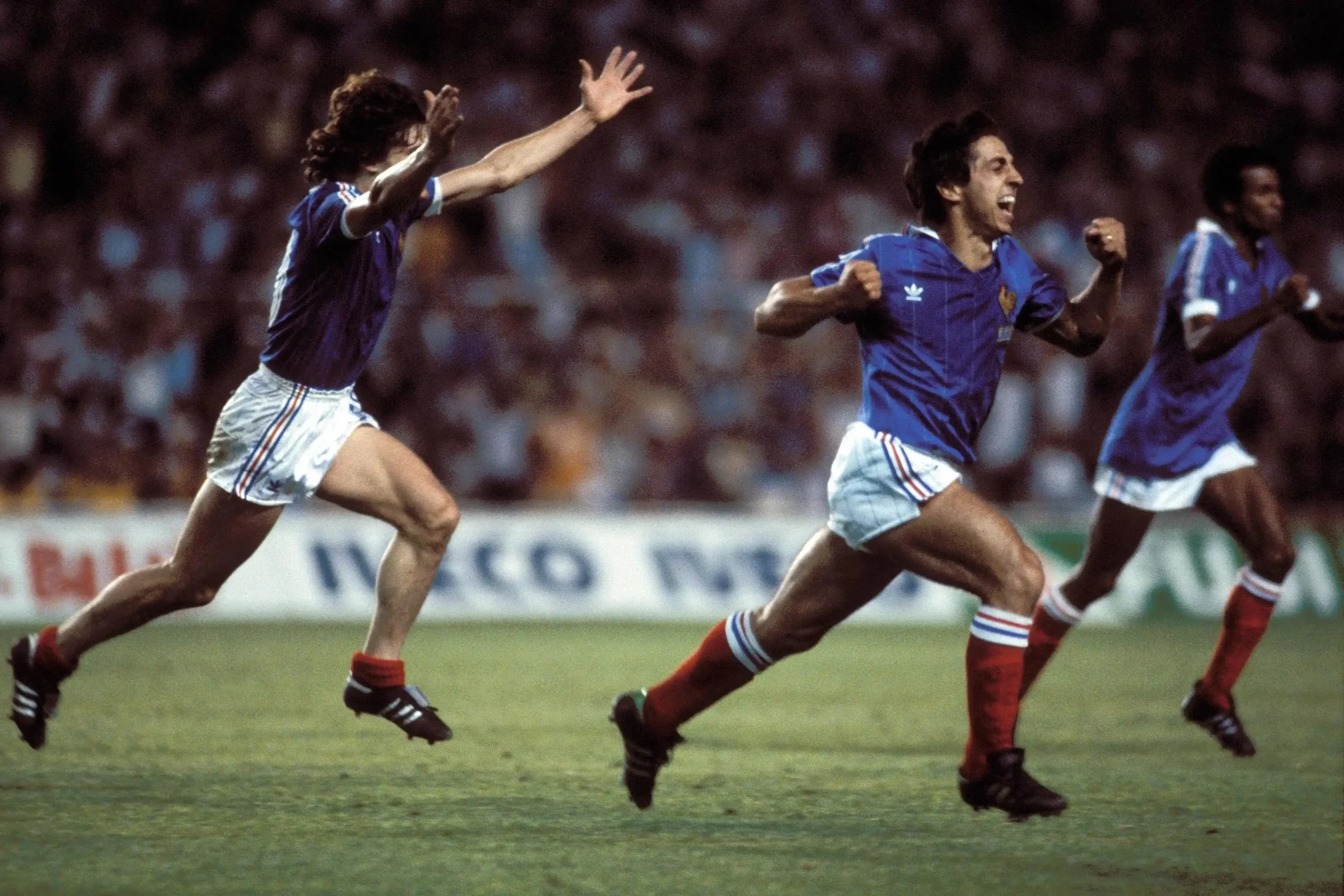
France 1982: fearless and free-flowing
The 1982 FIFA World Cup Spain™ marked a turning point in French football history. Under Michel Hidalgo’s tutelage, France adopted a free-flowing, fearless and attacking style of football. Their range of threats became apparent early on in the competition. Despite losing 3-1 to England in their opening match, the French still managed to get off the mark thanks to Gerard Soler’s first-half equaliser.
In their next outing, their collective strength was clear for all to see. Four more players – Bernard Genghini, Michel Platini, Didier Six and Maxime Bossis – got their names on the scoresheet as Les Bleus brushed Kuwait aside 4-1, with players’ roles overlapping and everyone capable of applying the finishing touch. After a 1-1 group-stage draw with Czechoslovakia and a 1-0 win over Austria – two games in which Six and Genghini added to their tallies – the French turned up the heat to finish the second group stage in style, with Alain Giresse and Dominique Rocheteau both bagging a brace to help their team reach the semi-finals at the expense of Northern Ireland, whose backline were given a torrid time in a 4-1 triumph for the French.
France were capable of striking from anywhere, without ever depending on one individual player. A semi-final contest for the ages against West Germany epitomised their sense of collective identity. Platini equalised from the penalty spot in the first half before the two sides traded blows for the rest of the game. Marius Tresor and Giresse each netted a goal early in extra time, but the West Germans hauled themselves level at 3-3 before ultimately prevailing 5-4 on penalties.
In the play-off for third place against Poland, Rene Girard and Alain Couriol completed France’s list of ten goalscorers, but they ultimately had to settle for fourth after falling to a 3-2 defeat. The French class of ’82 may not have fulfilled all of their rich potential, but their exploits are still fondly remembered nonetheless.
Les Bleus’ ten goalscorers at Spain 1982: Alain Giresse (three); Bernard Genghini, Michel Platini, Dominique Rocheteau, Didier Six (two); Maxime Bossis, Alain Couriol, Rene Girard, Gerard Soler, Marius Tresor (one).
Italy 2006: striking the perfect balance
At the 2006 FIFA World Cup Germany™, Italy won their fourth world title on the back of an exceptionally robust defence and a carefully-orchestrated distribution of attacking duties. They set the tone in their opening match against Ghana, with goals from Andrea Pirlo and Vincenzo Iaquinta giving the Azzurri a 2-0 win.
A strike from Alberto Gilardino secured a 1-1 draw with the USA in their second game, before Marco Materazzi and Filippo Inzaghi sealed a 2-0 victory over the Czech Republic. As the knockout phase unfolded, new heroes emerged in each round: Francesco Totti scored the only goal of the game against Australia in the Round of 16 from the penalty spot in the 95th minute, before Gianluca Zambrotta and two-goal Luca Toni saw off Ukraine in the quarter-finals; the semi-final against hosts Germany was a masterclass in Italian composure and tactical control, with Fabio Grosso and Alessandro Del Piero finding the net with the pressure sky high in the 119th and 121st minutes, respectively.
In the final against France, Materazzi was back on the scoresheet and cancelled out Zidane’s famous Panenka. The penalty shoot-out saw a consistent, disciplined and united Azzurri side crowned champions. The Italians had ten different goalscorers in all, culminating in a World Cup title earned through balance and consistency.
The Azzurri’s ten goalscorers at Germany 2006: Marco Materazzi, Luca Toni (two); Alessandro Del Piero, Alberto Gilardino, Fabio Grosso, Vincenzo Iaquinta, Filippo Inzaghi, Andrea Pirlo, Francesco Totti, Gianluca Zambrotta (one).
Belgium 2018: the golden generation
Belgium’s golden generation peaked at the 2018 FIFA World Cup Russia™ and displayed their impressive attacking prowess from the get-go. After coasting to a 3-0 opening victory over Panama thanks to a goal from Dries Mertens and a brace from Romelu Lukaku, they cruised past Tunisia, with Michy Batshuayi putting the icing on the cake after two braces for Eden Hazard and Lukaku once more.
The result of their final group-stage match was less emphatic, but Adnan Januzaj emerged as the surprise hero by bagging the only goal of a hard-fought contest against England. In the Round of 16, they narrowly avoided elimination by Japan after turning a two-goal deficit into a 3-2 victory, with Jan Vertonghen, Marouane Fellaini and Nacer Chadli exemplifying the Belgians’ ability to find goalscoring solutions without relying solely on their star forwards.
A 2-1 win over Brazil in the quarter-finals also saw two goals from two different sources: a superb strike from Kevin De Bruyne doubled Belgium’s lead after a Fernandinho own goal. After losing 1-0 to France in the semi-finals, Roberto Martínez’s men ended the tournament on a high note by beating the Three Lions again in the play-off for third place, with goals from the Red Devils’ tenth and final goalscorer, Thomas Meunier, as well as another from Eden Hazard.
Third place at Russia 2018 remains Belgium’s best-ever World Cup performance, only fitting for a golden generation of players who had fully matured as a team.
The Red Devils’ ten goalscorers at Russia 2018: Romelu Lukaku (four); Eden Hazard (three); Michy Batshuayi, Nacer Chadli, Kevin De Bruyne, Marouane Fellaini, Adnan Januzaj, Dries Mertens, Thomas Meunier, Jan Vertonghen (one).