What made you fall in love with football? The beautiful game that gives us so many emotions.
To mark International Women’s Day, which is celebrated every year on 8 March around the world, FIFA asked female players who – or what – inspired them to choose the football pitch as their field of dreams.
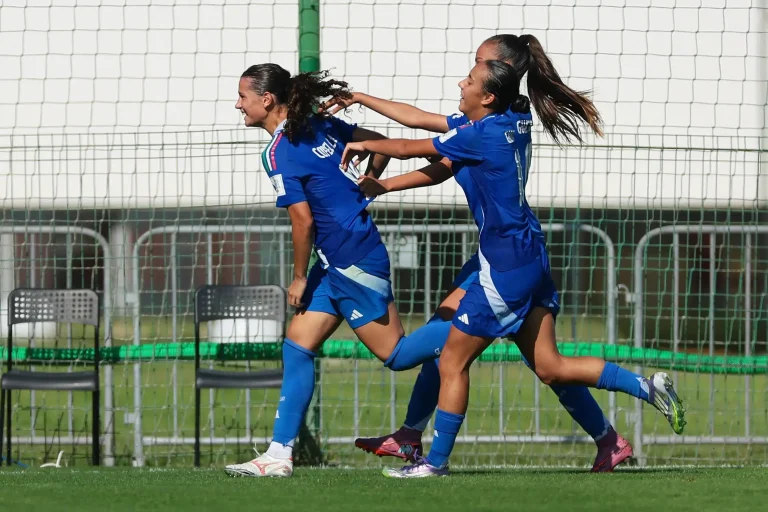
“I started playing football because my brother played”, says Italy’s Barbara Bonansea. “But I think it was something I had inside me from birth. I believe that if you don’t have it inside you, you’ll give up.”
“The women in my life also inspired me on this journey: my mother and my grandmother, who sadly is no longer with us. They are people I saw working every day for others without complaining, without wanting recognition. This inspired me, and I try to emulate them and work every day to improve myself and the environment I am in.”
For Papua New Guinea international Yvonne Gabong, it’s also a family affair. “I was with my younger brother, I guess we were around nine or ten, taking turns shooting and going in goal,” says the player who has just competed in the OFC qualifiers for the FIFA Women’s World Cup 2027™. “He was standing in the goalmouth and when I shot, he broke his foot. He forgives me now, but that’s how it all started, when I first got into football.”
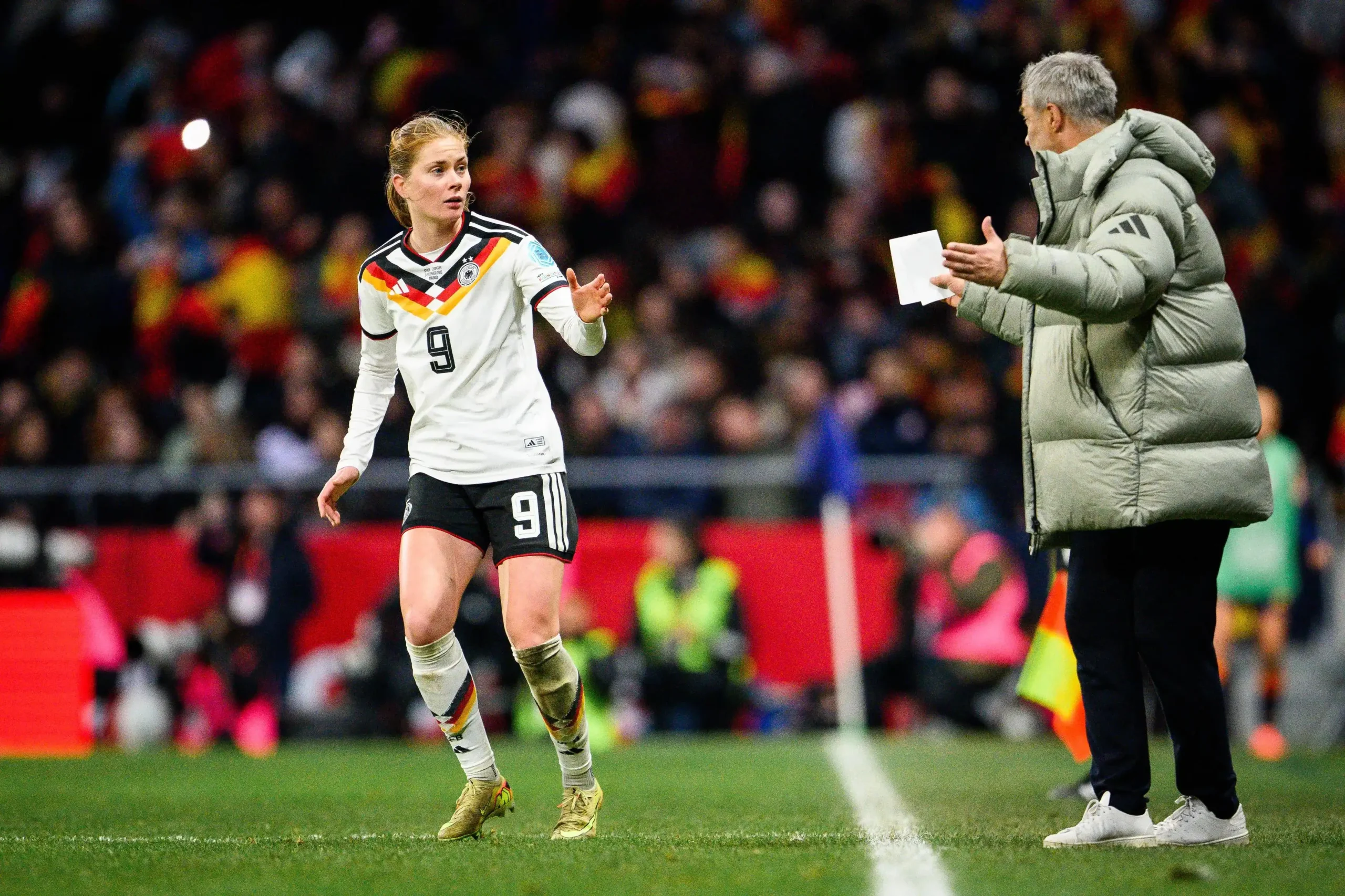
Germany’s Sjoeke Nüsken also believes she was influenced by her family circle. “For me, it was my sister. Back in the day she also used to play football, and it was always the case that I immediately wanted to do everything she was doing. That’s what brought me to football.”
“Football was always my passion from when I was very young and I owe a lot to my father”, explains India midfielder Shilky Devi Hemam. “At that time, there were hardly any girls or women, just one or two, in my hometown that played football but he was always encouraging me to play. As we didn’t have a television in our house at that time, with my father, my neighbours and everyone else in the area, we would all gather in one house with a television and watch big matches, like at the World Cup.”
For her part, although she says she admired Lionel Messi and the Barca men’s team when she was little, 21-year-old Cameroon international Monique Ngock also cites a member of her family as her source of inspiration. “The person who mattered most was my mum. She was there at a time in my life when I wanted to give up, because people didn’t have much faith in me. With the way society viewed female footballers at that time, it was a bit tough. But my mum was there for me right from the start.”
“I’d be lying if I said there was one player in particular who inspired me to play football”, continues Ngock, who plays for FC Fleury 91 in France. “At the very beginning, I watched a lot of men’s football – a huge amount, in fact. My role model was Marc-Vivien Foe. I remember discovering the Cameroon women’s national team afterwards. I thought to myself, ‘Oh, there are women representing our country?’ That’s when I discovered Gaelle Enganamouit. She was really at the top of her game, she was the best Cameroonian player, even though I didn’t really know what impact she had off the pitch. Then I discovered other players like [Gabrielle] Aboudi Onguene and Ajara [Nchout].”
Clara Mateo, who is seven years older than the Cameroonian player she regularly faces on the pitches of the French Premier League with Paris FC, has struggled with the lack of visibility of women’s football. “I didn’t necessarily have any particular inspiration,” says the 27-year-old France international. “Because at the time – I sound like I’m very old (laughs) – it wasn’t necessarily very well covered in the media. But I’m a huge athletics fan, so obviously Marie-Jose Perec. She was very inspiring.”
Josefine Hasbo, for her part, was immediately impressed by one of her team-mates on the Denmark national team. “Being a more mature player in the game, I ultimately get exposed to many wonderful personalities and players; Pernille Harder, for instance, from our Danish team. She’s incredible to be around and she’s really been one from Denmark that has pushed the boundaries and pushed the limits of what we can do in Danish football. So I would probably point to her.”
“Ultimately, I think it’s my love for the game that has driven me to where I am today”, continued the Danish player from Boston Legacy FC and Harvard graduate. “And then I think there’s some luck associated too with the fact that my best friend when I was seven years old played football. I wanted to join in the schoolyard and then kind of one thing led to the next. But really the push for that next high elite environment has been because I love the game and because I have an internal drive that I want to push myself and I want to challenge myself.”
The desire to push her limits was also the motivation for China PR defender Wang Linlin. “When I first started playing football, it wasn’t because I watched matches on TV, rather it was because I hadn’t been very strong physically since I was young,” she explained. “At the beginning, I just wanted to get into sports to improve my health. As football made my body stronger, it also made me fall in love with the sport. In the evenings, our coach would play match broadcasts for us, and we watched the older women competing live on television. I really admired them and I told myself that this was my dream and my goal and that I would work hard to represent the national team one day.”
At 24 and 25 years of age, the Danish and Chinese players may not yet have experienced the evolution of women’s football over the years, but their elders certainly have.
“The biggest improvements have probably been the investment,” explained Raquel Rodriguez, the 32-year-old Costa Rica international. “It all comes down to that, right? With investment comes better resources and everything’s a little more professional. It’s a job now. We can be professionals. From how it was when I started to now is so different. Around the world it’s grown so much.”
Echoing ‘Rocky’s’ words, Italy’s Bonansea concludes: “I believe that our generation in Italy has helped the women’s football movement to grow a lot. We have fought to get to where we are today, but we must continue on this path and try to pass on the message to younger girls.”
And thus become a source of inspiration for future generations of great female footballers.