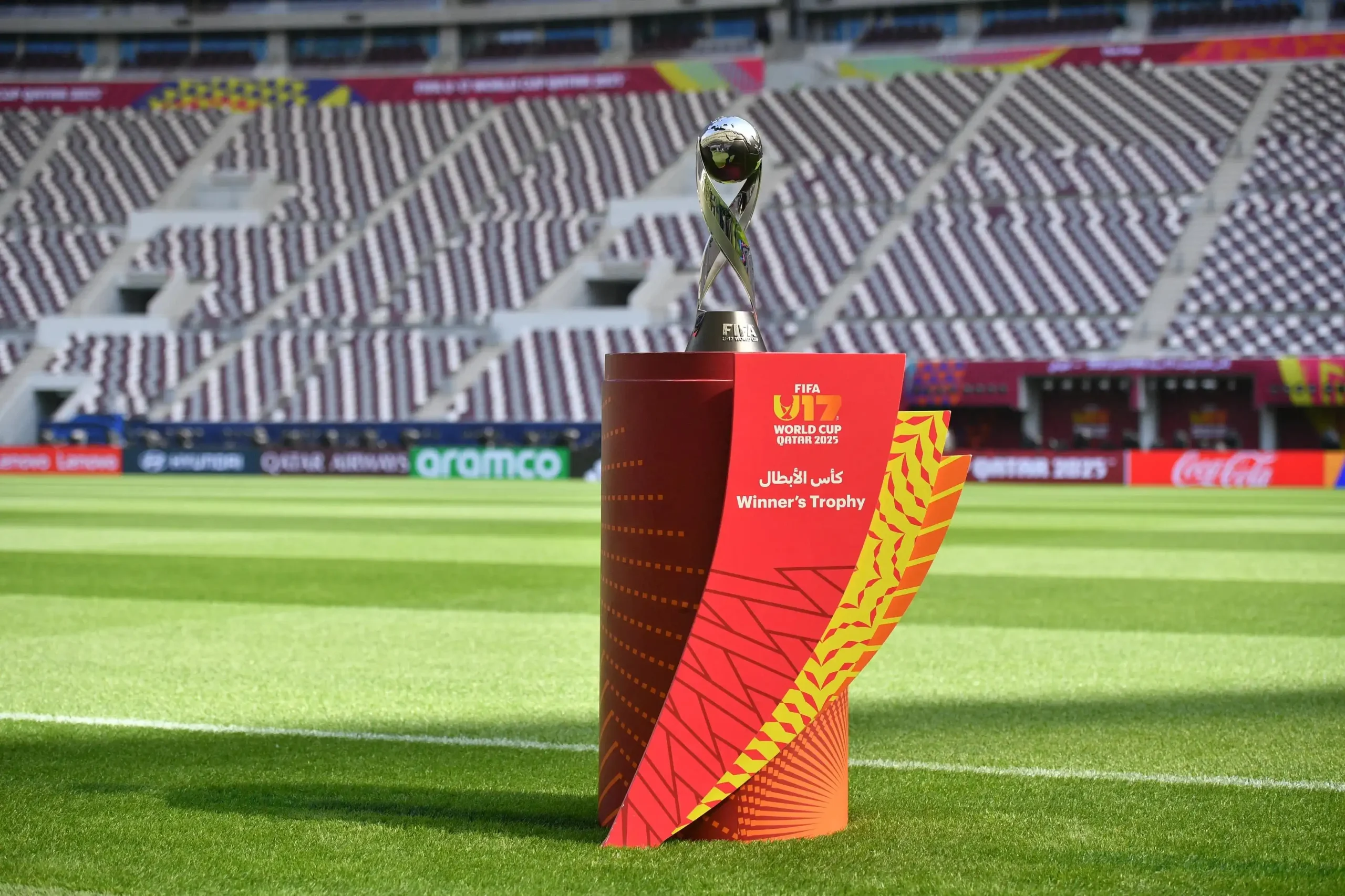
Forty-eight nations will compete for glory when the FIFA U-17 World Cup™ returns to Qatar in 2026. Find out key information about this year’s showpiece tournament below.
When and where is the FIFA U-17 World Cup 2026™?
Dates
The U-17 World Cup will take place in Qatar from 19 November to 13 December 2026.
Host city
In a similar set-up to the 2025 edition, matches will be staged at the state-of-the-art Aspire Zone complex in Al Rayyan, Doha.
FIFA U-17 World Cup 2026 teams
A full list of nations who have qualified so far can be viewed below.
Qualified teams (30/48)
Host nation: Qatar
Concacaf: Costa Rica, Cuba, Haiti, Honduras, Jamaica, Mexico, Panama, USA
CONMEBOL: Argentina, Brazil, Chile, Colombia, Ecuador, Uruguay, Venezuela
OFC: Fiji, New Caledonia, New Zealand
UEFA: Belgium, Croatia, Denmark, France, Greece, Italy, Montenegro, Republic of Ireland, Romania, Serbia, Spain
Last year’s U-17 World Cup was the first to feature 48 teams. It was hugely successful event, with packed-out, vibrant crowds savouring the chance to watch football’s greatest young talents perform on the global stage.
Remaining qualification tournaments
Qualification places: 9 (including U-17 World Cup host nation Qatar)
Host: Saudi Arabia
Dates: 5-22 May
Qualification places: 10
Host: Morocco
Dates: 13 May-2 June
Draw
The draw for the U-17 World Cup will take place on Thursday, 21 May at the Home of FIFA in Zurich and will be broadcast on FIFA channels.
Tournament format
The 48 qualified nations will be drawn into 12 groups of four teams. The top two teams in each group, along with the eight best third-placed sides, will qualify for the Round of 32. From the Round of 32 onwards, the tournament will be played in a knockout format.
Previous champions
1985: Nigeria
1987: Soviet Union
1989: Saudi Arabia
1991: Ghana
1993: Nigeria
1995: Ghana
1997: Brazil
1999: Brazil
2001: France
2003: Brazil
2005: Mexico
2007: Nigeria
2009: Switzerland
2011: Mexico
2013: Nigeria
2015: Nigeria
2017: England
2019: Brazil
2023: Germany
2025: Portugal
adidas Golden Ball winners
1985: William (Brazil)
1987: Philip Osondu (Nigeria)
1989: James Will (Scotland)
1991: Nii Lamptey (Ghana)
1993: Daniel Addo (Ghana)
1995: Mohammed Al-Kathiri (Oman)
1997: Sergio Santamaria (Spain)
1999: Landon Donovan (USA)
2001: Florent Sinama Pongolle (France)
2003: Cesc Fabregas (Spain)
2005: Anderson (Brazil)
2007: Toni Kroos (Germany)
2009: Sani Emmanuel (Nigeria)
2011: Julio Gomez (Mexico)
2013: Kelechi Iheanacho (Nigeria)
2015: Kelechi Nwakali (Nigeria)
2017: Phil Foden (England)
2019: Gabriel Veron (Brazil)
2023: Paris Brunner (Germany)
2025: Mateus Mide (Portugal)