Prior to the start of Major League Soccer (MLS) in April 1996, the American game looked more like an alphabet soup. After the North American Soccer League (NASL), made famous by Pele and the New York Cosmos ceased operations in 1984, organizations such as the American Professional Soccer League (APSL), American Soccer League (ASL), United States Interregional Soccer League (USISL), Western Soccer League (WSL) and others took up the mantle for the domestic game.
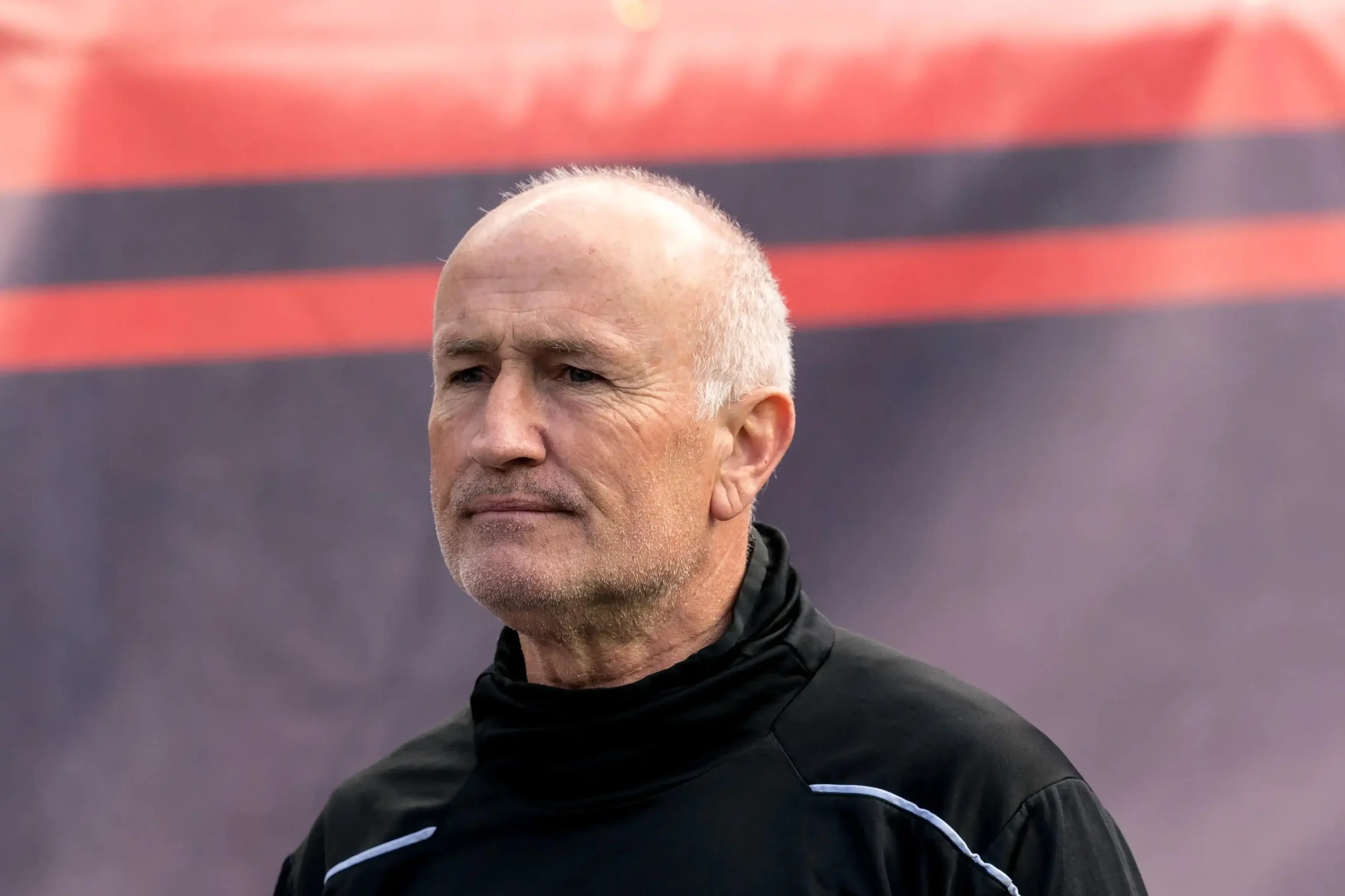
The players from those leagues toiled in anonymity for years before being brought out of the wilderness under the MLS umbrella. Among the men who were part of that movement was Dominic Kinnear, a former USA international who played with the San Francisco Bay Blackhawks of the WSL and APSL in the late 1980s and early ‘90s. Kinnear would go on to play five seasons in MLS before retiring in 2001. Since then he has coached, his highlight being two MLS Cup titles with the Houston Dynamo.
The FIFA World Cup 2026™ will no doubt serve as a milestone event in American soccer, just as USA 1994 did, and there is no better person than Kinnear, currently an assistant coach at Sporting Kansas City, to talk to FIFA about the sport’s growth in the country and what could lie ahead.
People always ask, ‘Do you feel like you were a pioneer in building something special?‘ That was never the case. I just wanted to play soccer. If we made a little bit of money, we were really happy about it.
I played for the San Francisco Bay Blackhawks. A lot of guys there went on to have some really important roles for U.S. Soccer: John Doyle, Eric Wynalda, Marcelo Balboa. Our first year as the Blackhawks, we didn’t have a home stadium, so we went around the Bay Area and played at different high schools. You were getting your ankles taped in the back of our trainer’s truck bed. Most of the fields we played on were high school stadiums that had a dirt track around it. The locker rooms were high school football locker rooms. But there were some great players that were playing back then.
We had in our contracts that we would do soccer camps, and if you could do camps, that was gold. I did some odd jobs. I drove a laundry truck before playing for the Blackhawks for a guy who used to own the Greek-American soccer team. At that time, it was playing and doing camps because we weren’t full-time. We would practice at night, sometimes three days a week, and we would get camps. When you showed up to practice, you were given $25 to pay for gas and food for that day. That $25, like six or seven of us after every practice, we’d go to this restaurant, sit there and have some food and drinks, listen to music, talk about practice, talk about life. If you took me back there now, I’d be super happy.
There were stories about some teams on payday, the players were rushing to get out of the locker rooms to go to the bank to deposit their check because sometimes the funds would run out. That never was the case for our team because our owner, Dan Van Voorhis, for me, was probably the best owner in the league. As far as infrastructure, stability and safe facilities, it was definitely lacking, but I’ll be honest, we weren’t one for complaining. We just wanted to play.
They made a push to bring in some big-name players to get some variety for the league. You’d say, ‘Wow, Carlos Valderrama plays in our league. Jorge Campos.’ The facilities were a little bit better too, even though in the [Colorado] Rapids we used to change in a community center. Sometimes we’d be changing next to a guy and his son who were getting ready to go work out.
There was maybe one game a week on TV at the time, so it gives you that perspective. That’s what I always think about when people talk about MLS. I just think, ‘Man, if you could see where it started and where it is now.’ It’s been such a rapid, positive growth over such a short period of time.
Exposure, stadiums and the growth of the young American. I look at MLS as having a couple of phases or eras. There’s the early one, and then Landon Donovan coming back to MLS was such a great push for the league and for him. There was the contraction when they removed the Florida teams [Miami Fusion and Tampa Bay Mutiny], which was the early 2000s. The David Beckham push was maybe unparalleled, except until Lionel Messi.
It still comes down to the players. If you want the players – the best players – you’ve got to pay the best money. I think if we can get a young superstar that looks at America and goes, ‘Ok, this is the place for me.’ I think everybody wants that. So that for me is the next step.
Oh, man… The San Jose Earthquakes from the NASL days, George Best and Pele coming to town, the New York Cosmos. Going to the games. My father was a pretty successful youth coach with a team called Fremont Celtic. The Blackhawks were also a big part of it, the San Jose Clash, the 1984 Olympics. There were some wonderful games at Stanford Stadium that I went to. The World Cup in 1994. USA played Brazil at Stanford Stadium. Also, the five-goal game by Oleg Salenko for Russia versus Cameroon was there.
You think about MLS and going from [San Jose’s] Spartan Stadium to the opening of the new stadium. Santa Clara University and Stanford being powerhouses in college soccer. All of the women that have played for the national team in the Bay Area as well: Brandi Chastain, Julie Foudy, Danielle Slaton. There’s a huge, rich, successful history in the Bay Area.
They have a great stadium. It’s got great games. It’s got great teams coming to town. It’s a great city. Great food, great people and a love for soccer.
Photo credit: Pedro Rondon