
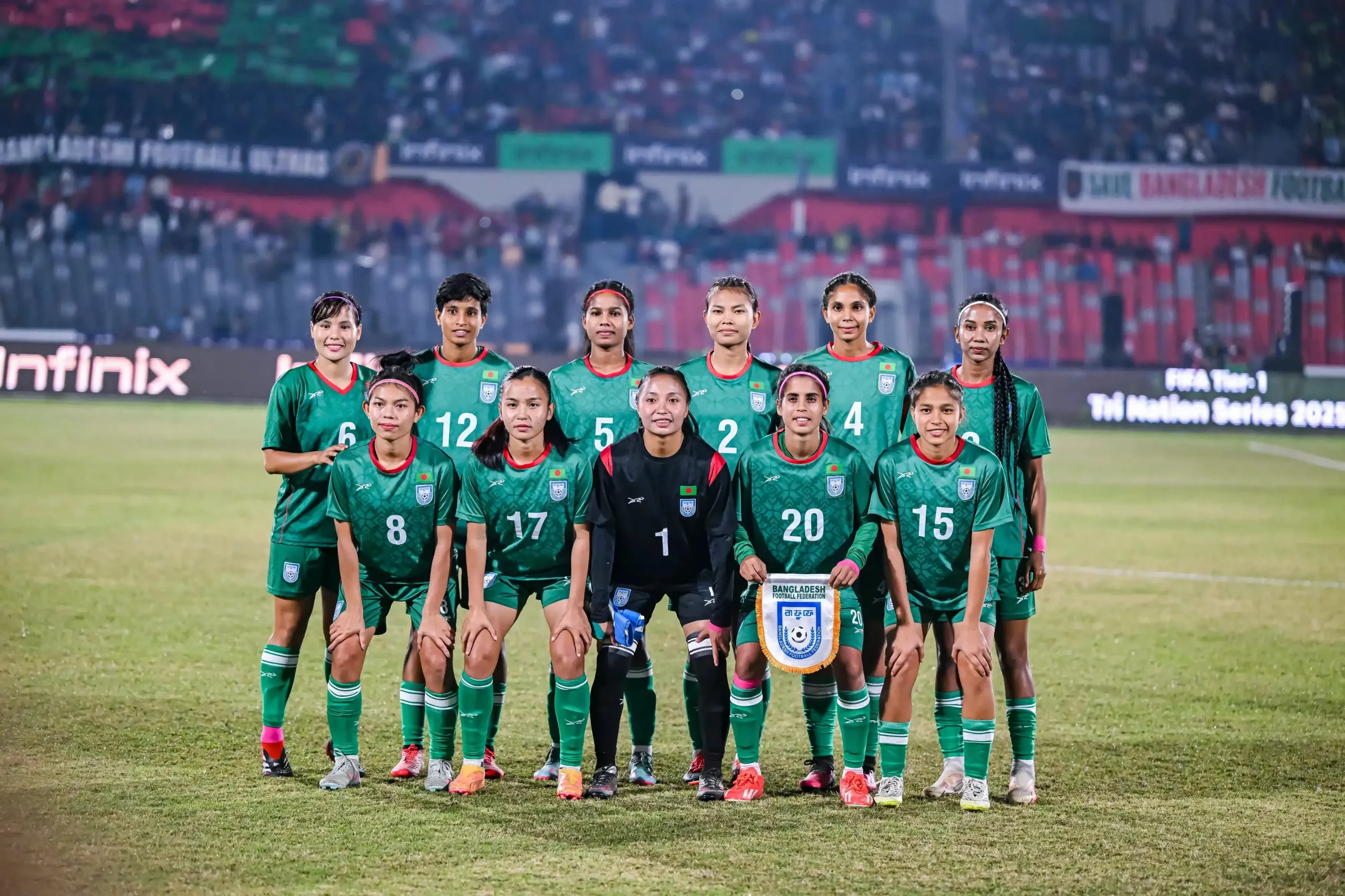
When Bangladesh step on to the pitch at the AFC Women’s Asian Cup 2026 in March, history will truly have been made.
For the first time, the Bangladesh women’s national team will compete in Asia’s most prestigious women’s tournament – a significant milestone that also gives them an opportunity to qualify for the FIFA Women’s World Cup 2027™. Behind this breakthrough stands head coach Peter Butler, who has rebuilt the team over three years by focusing on fundamentals .
The 59-year-old English coach has worked across continents, cultures, and stages of development, coaching in various parts of Asia and Africa for over two decades. In these environments, progress is often measured not by trophies, but through structure and sustainability. This experience now underpins one of the most significant achievements in this South Asian country’s history.
“I see this qualification as a huge achievement,” said Butler to FIFA. “This is a very young group. Almost half the squad is under 20 years old, and at the same time our U-20 team also qualified for the Asian Cup. It shows there’s something big happening.”
For Butler, building a long term plan is more important than quick wins. The senior team and youth teams are now moving forward together, with younger players like Ritu Porna Chakma, Sapna Rani and Afeida Khandaker forming the backbone of the side.
“This is an opportunity for these players to showcase their talents on a much larger stage,” he explained. “We not coming in expecting to win the tournament, but the main aim is to lay the foundations, to build something that enables Bangladesh to qualify again and again.”
When Butler first took over, he made it clear that the changes he was bringing in would be tough and unlikely to be popular.
“We basically reorganised and restructured the senior national team by bringing in more young players”, said Butler. “Before I arrived, there were players in the squad who didn’t deserve to be there. It wasn’t easy for everyone, but then I’m not here to make people happy. Sometimes you have to make hard decisions, and the players have risen to the challenge.”
Such development does not come without challenges, and Butler points to mindset, resources and infrastructure as three key areas of focus.
“I think the biggest challenge is getting people to accept new ideas and a new competitive environment,” he said. “Diet and nutrition are significant hurdles, as are training facilities. There’s a real shortage of training facilities in this country. Those constraints meant we had to have a rethink. If I have learned one thing from this, it’s the ability to improvise and adapt. I’ve had to be more flexible in my approach to training, given the challenging conditions.”
Qualification for the Asian Cup has begun to have an impact on Bangladesh’s youth development system, but Butler remains cautious.
“I think we still have a very long way to go,” he said. “We’ve only just got started. The bigger challenge is still ahead of us.”
However, the signs of momentum are becoming clearer. Recent regional successes, including strong performances in SAFF youth competitions, has helped identify players capable of rising to the next level.
“My focus in the youth tournaments is not to win trophies,” explained Butler. “Rather, it’s on identifying who can perform at the regional level.”
The Asian Cup draw introduces tough opponents to Bangladesh, as they are in Group B together with Korea DPR, China PR and Uzbekistan, and Butler is under no illusions about the task ahead.
“We will be organised, competitive, and try to play good football,” he said. “However, qualifying for the Women’s World Cup is a very high mountain to climb.”
For the former Botswana and Liberia national team coach, the Asian Cup is not about getting carried away with thoughts of 2027.
“My only focus is to compete well against China, Korea and Uzbekistan,” he said. “That’s the challenge lying in front of us. The main objective is not to qualify, but rather to make an impact – playing the right way, with good ethics, good discipline, and good performances.”
Amid the rapid growth of women’s football globally, Butler believes developing countries should be careful not to prioritise image over substance.
“Football shouldn’t just be about social media, visual drills, or short clips,” he said. “Real development comes from coaches who really coach, working with players, building programs, and sharing knowledge. The growth of women’s football is accelerating and if you don’t keep up, you’ll be left behind.”
As Bangladesh prepare for their debut at the Asian Cup, Butler’s vision remains grounded, patient and clear.