
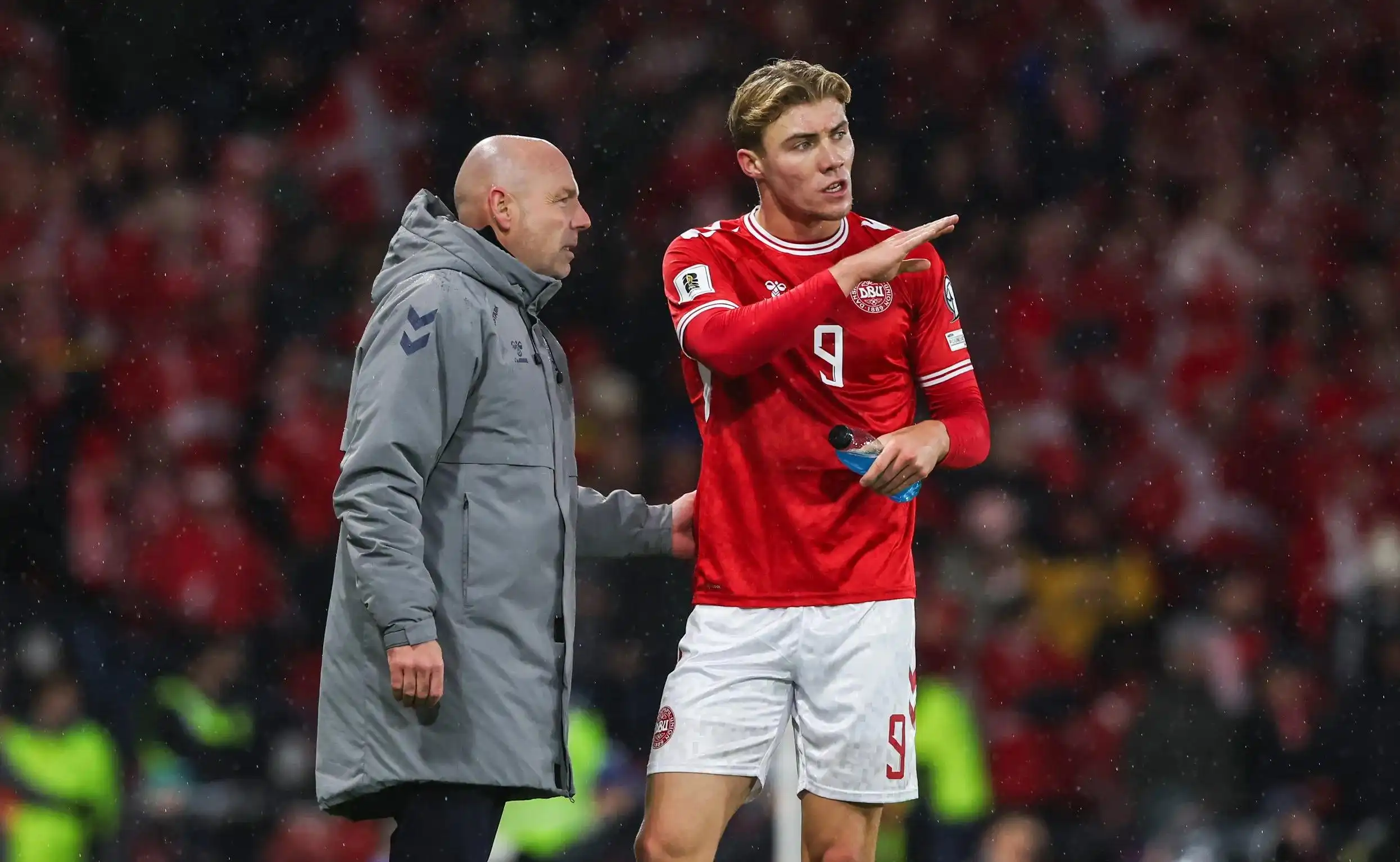
The Scottish celebrations following their dramatic stoppage-time exploits to secure qualification for the FIFA World Cup 2026™ dominated many end-of-year reviews. The dejected faces of the defeated side on that famous night in Glasgow were less prominent, however. Two months on from one of those scarcely believable tales that football produces with such wondrous regularity, the shock in Denmark has slowly subsided.
The Scandinavians are now looking ahead and feeling optimistic of making amends by booking their ticket to the North American showpiece via the UEFA play-offs. To do so, they must first overcome North Macedonia in the semi-finals, with the winners going through to take on either Czechia or the Republic of Ireland.
After disappointing results on the last two matchdays of the group stage in November, criticism was inevitable. Having slipped to a draw at home to Belarus in the first of those matches to give the Scots some hope, the Danes went on to shoot themselves in the foot at Hampden Park, conceding two goals in injury time to surrender top spot in Group C.
“I wouldn’t describe it as a ‘fiasco’,” insisted Denmark coach Brian Riemer at the time. “We have another chance to qualify for the World Cup via the play-offs in March. Let’s wait before we pass any final judgements.”
The 47-year-old, previously in charge at Anderlecht, is keen to remain upbeat: “The dark clouds that surrounded us after the Scotland game have lifted. We now have the opportunity to seal a World Cup place via the play-offs. That’s our clear objective and we expect to achieve it. We’re in a good position and are ready for the challenge.”
These bullish words will now need to be backed up with a convincing performance on 26 March in Copenhagen. “I’ve done my homework on North Macedonia, and we know that they’re a typical Balkan side who play with a lot of heart,” said Riemer, who also has one eye on preparing for a possible showdown with Czechia or the Republic of Ireland on 31 March.
“We know all about Ireland, who have a physical, direct style of play and beat Portugal recently. As for Czechia, they have a strong pedigree, although they’re perhaps not quite the force they once were. Either way, we’ll need to be at our best to win.”
Riemer’s confidence ahead of the play-offs is far from unfounded given that the tactician can call on a well-rounded squad packed with stars and rising talents. Among the standout figures are striker Rasmus Hojlund, who has rediscovered his goalscoring touch since joining Napoli on loan from Manchester United, and midfield prospect Victor Froholdt, who is very much the man of the hour.
Froholdt, who reportedly cost Porto in excess of €20 million in July last year, has continued his meteoric rise while plying his trade in Portugal. Still only 19, the former FC Copenhagen schemer has already made eight appearances for the national side and opened the scoring in October’s 6-0 win away to Belarus. He capped an impressive 2025 in December by being named Danish Footballer of the Year.
On paper, the Danish squad is blessed with talent from front to back. Moreover, it boasts a good blend of youth and experience, with most of the key players lining up for top European clubs and accustomed to pressure. It is small wonder, then, that many experts see the Red and Whites as the clear favourites to progress from their section of the play-off draw.
Should the 1992 UEFA European champions make it to the global showpiece, a highly-enticing assignment awaits them in North America. The Scandinavians would face co-hosts Mexico, with South Africa and Korea Republic rounding out an exciting Group A line-up.
“It’s an intriguing group and one that will test us – but first, we need to get there,” stressed Riemer. “Mexico was where Denmark’s historic World Cup journey started back in 1986. We now have the opportunity to qualify for the World Cup for the third time in a row and to play at a legendary stadium. Small details will make the difference, but for now we’re fully focused on North Macedonia.”