The 2026 women’s international season is set to throw European teams straight in at the deep end, with UEFA qualifying for FIFA Women’s World Cup Brazil 2027™ kicking off on 3 March.
The schedule will feel more like a sprint than a marathon, with the first four European berths set to be decided by 9 June at the latest. During the double-headers in early March, mid-April and early June, the four teams in each group will face each other in home-and-away fixtures.
Only League A group winners will secure direct qualification for the global showpiece during this first phase of qualifying. Between October and December this year, 32 teams will contest the play-offs, which will determine the remaining seven direct spots and the nation that will go into the FIFA Play-Off Tournament.
With so much at stake, League A promises to be particularly intense and competitive. FIFA takes a closer look at the four groups.
Group A1: Denmark, Italy, Serbia, Sweden
The group, which features two northern and two southern European teams, has a certain spice to it. Although Serbia would be World Cup debutants, the quartet nevertheless collectively boasts the joint-highest number of final-competition appearances (18, tied with Group A4). The two Scandinavian sides have faced each other eight times in World Cup qualifying. A clear pattern has emerged, with Sweden, ever-present at the final competition, winning five of those matches against Denmark.
Serbia’s project adds another intriguing layer. Coach Lidija Stojkanovic, who led the team to promotion from Nations League, became the first woman to be named the country’s Coach of the Year. It was a remarkable honour and a source of additional motivation: “The road to the World Cup won’t be easy, but it’s ours to shape. Opportunities are there to be seized.”
Group A2: France, Netherlands, Poland, Republic of Ireland
Despite their strong credentials, vast squad potential and years of reliable goals from Eugenie Le Sommer, France’s most-capped player, Les Bleues are still chasing their first major tournament title. Head coach Laurent Bonadei is determined to change this; his conviction is unshakeable: “We want to hit the ground running in this group and finish on top. We have a structured game plan that is built on possession, attacking play and effective set pieces.”
On paper, their toughest challengers are the Netherlands. The FIFA Women’s World Cup France 2019™ runners-up remain unbeaten in the four matches since Arjan Veurink took the reins. Meanwhile, Poland and the Republic of Ireland – who both earned promotion to League A in the most recent edition of the Nations League – are eager to make waves among Europe’s powerhouses.
Group A3: England, Iceland, Spain, Ukraine
A ripple of excitement swept through the hall when the balls were drawn and opened: Spain and England, the two dominant forces of the last two major tournaments, destined to meet again. La Roja won the FIFA Women’s World Cup Australia/New Zealand 2023™ final, while England struck back in last year’s UEFA EURO 2025 trophy decider.
As fans anticipate two blockbuster clashes, Iceland and Ukraine are facing a truly formidable task. “We need to produce our best performances in a long time if we want to make the most of these matches,” said Iceland tactician Thorsteinn Halldorsson. Meanwhile, Ukraine’s new coach Iya Andrushchak views the challenge as a chance to gain valuable experience: “We get to measure ourselves against teams like this and see our true level. It’s about the opportunity to prove yourself on the pitch, not worrying about making mistakes.”
Group A4: Austria, Germany, Norway, Slovenia
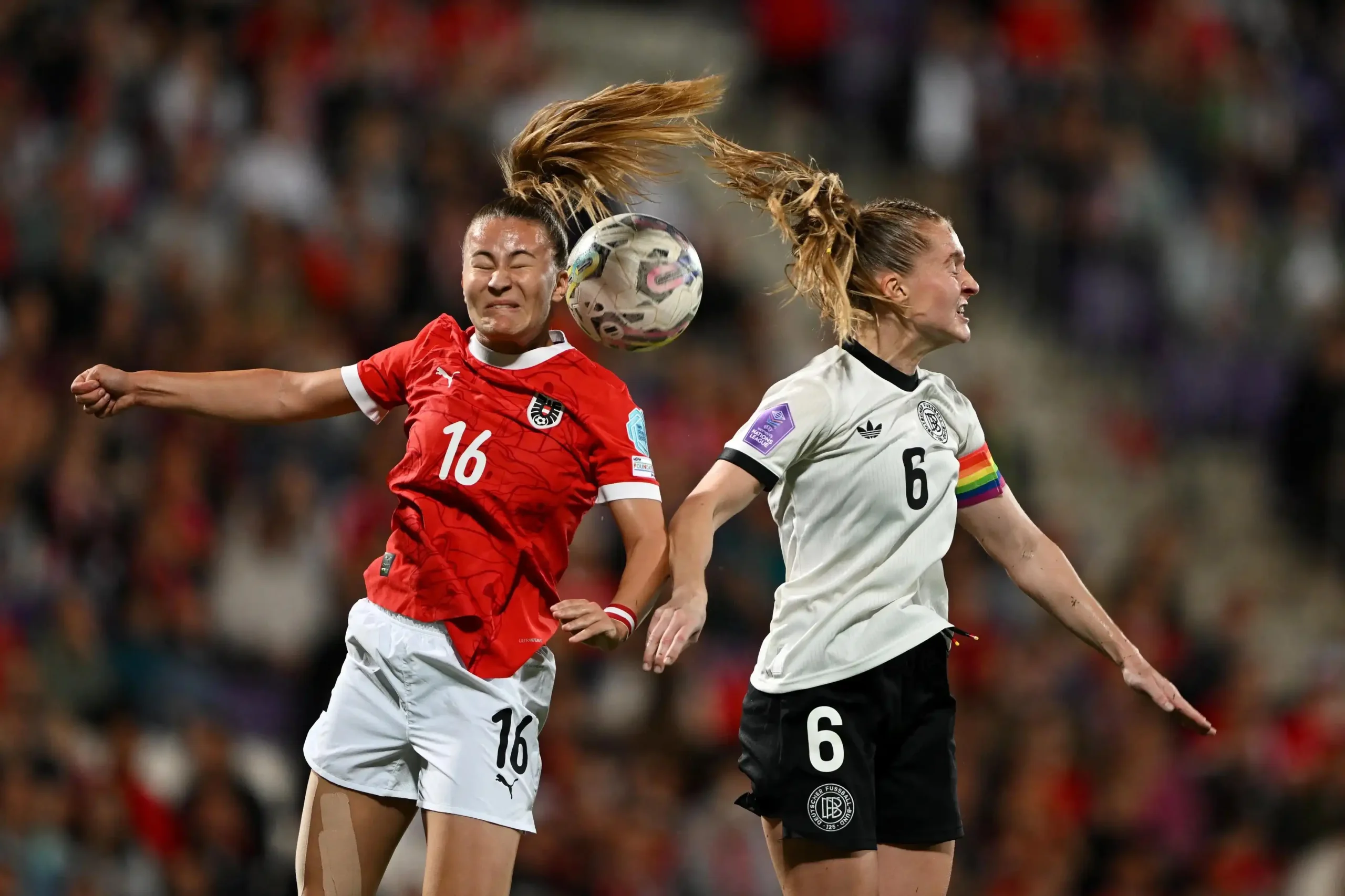
Germany and Norway have already crossed paths three times at the final competition, most memorably at Rasunda Stadium in Solna in 1995, when the Scandinavians surged into a 2-0 lead and held on for the greatest triumph in their nation’s history. In more recent years, however, Germany have generally had the upper hand. “We now want to continue closing the gap between us and Spain and other top nations,” said Germany’s coach Christian Wuck ahead of qualifying.
Slovenia, who clinched a seat at the European top table as the winners of 2025 Nations League Group B2, will be bidding to seal their maiden appearance at the FIFA Women’s World Cup – the same ambition that is harboured by group-mates Austria. “That is the dream for us all,” said Austria coach Alexander Schriebl in an interview with FIFA. “This is the seventh attempt, so we would love to make the dream a reality.”