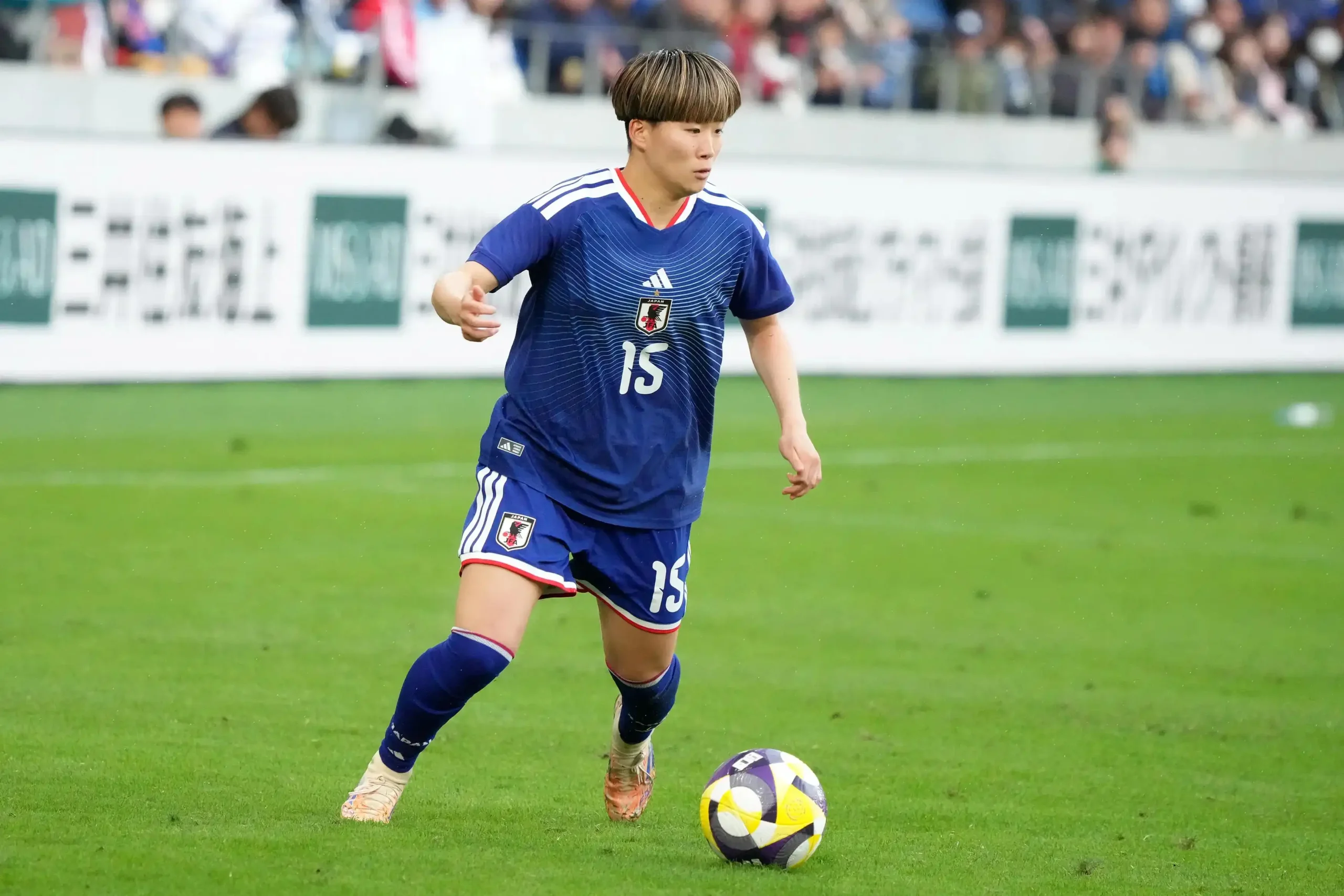
A little over two years ago, Aoba Fujino’s dream of seeing Sydney came to a shuddering halt. Next month, the 22-year-old will head to Australia with a burning desire to write the wrongs from the previous edition of the FIFA Women’s World Cup™, and ensure that Japan qualify for the subsequent edition, to be hosted in Brazil next year.
The second youngest member of the Nadeshiko squad at the tournament co-hosted by Australia and New Zealand in 2023, Fujino became Japan’s youngest ever scorer when she struck against Costa Rica in her nation’s second group outing.
Having sauntered through the group stage with a perfect record, including an astonishing 4-0 unpicking of Spain, Japan then brushed aside Norway in the Round of 16 before falling 2-1 to Sweden in the quarter-finals. With all five matches played in New Zealand, it saw the nation fall just short of reaching the final at Sydney’s Stadium Australia.
That will be the same venue for the final of next month’s Women’s Asian Cup, a tournament which, for the final time, will double as the qualifiers for the Women’s World Cup. While Japan are chasing a third continental title, they know that there is also a far bigger prize on offer under the guidance of coach Nils Nielsen, as Fujino details to FIFA.
“Knowing that it’s a tournament where we can earn a ticket to the World Cup makes it incredibly interesting and [the coach] often tells us to be confident, to be brave, and to believe in ourselves.
“There’s an atmosphere now where everyone is trying to be positive and proactive”.
The initial task for the Nadeshiko at the 12-team tournament will be to navigate a group that contains Chinese Taipei, India and Vietnam. With Asia allocated six direct berths to Brazil 2027 it means that the winning quarter-finalists will punch their tickets to South America.
Given that there are an additional two berths potentially available via the Play-Off Tournament, it makes reaching the last eight the minimum requirement for Japan.
Having missed the previous edition of the Women’s Asian Cup through injury, the upcoming tournament is especially important for Fujino. The forward knows though just how much of a challenge it will be in one of the most competitive confederations in women’s football.
“I’m really excited [for the tournament] but in Asia, teams are more evenly matched, so it’s really difficult to find ways to create chances and win.”
Fujino though has a clear vision of the role she intends to play at the Asian Cup where she wants to push forward, create chances and score goals.
“Opening up the game with dribbling or passing is one of my strengths. I want to lead the attack with forward momentum”.
Having come through the ranks at hometown side Tokyo Verdy Beleza, Fujino is now on the books of English power Manchester City. The club has become something of a destination for Japanese players in recent years, with fellow Nadeshiko stars Yui Hasegawa and Ayaka Yamashita also set to travel from Manchester to Australia for the Women’s Asian Cup.
With her injury recovery continuing in a positive manner, another City star, Australia’s Mary Fowler, is set to headline the tournament on home soil. Coming up against her club teammate at international level is a prospect that Fujino is relishing, as she explains to FIFA.
“It’s half-joking, but we’ll say things like, ‘Japan are strong, so it would be nice to meet in the final,’ but she tells me that Australia has beautiful beaches, and we’ll say it would be nice to go to the ocean one day.”
The oceans of Brazil aren’t half bad either and it’s there that Fujino is targeting to be next year as Japan will look to chase a second global title, should they safely navigate passage through the continental qualifiers.
There, she is aiming to use the disappointment from her last tournament in the southern hemisphere to spur greater success in the next one.
“When we failed to get past the quarter-finals, it was a moment that made me look at myself and go back to basics. It made me realise I still need to grow.”
“Little by little, I’ve grown to learn what it means to carry the responsibility of representing my country,”
“Now [in Brazil] I want to be a central figure who leads the team and who can deliver when things are tough.
“I want my teammates to see me as someone they can rely on. To do that, I need to keep producing results in attack, again and again.”