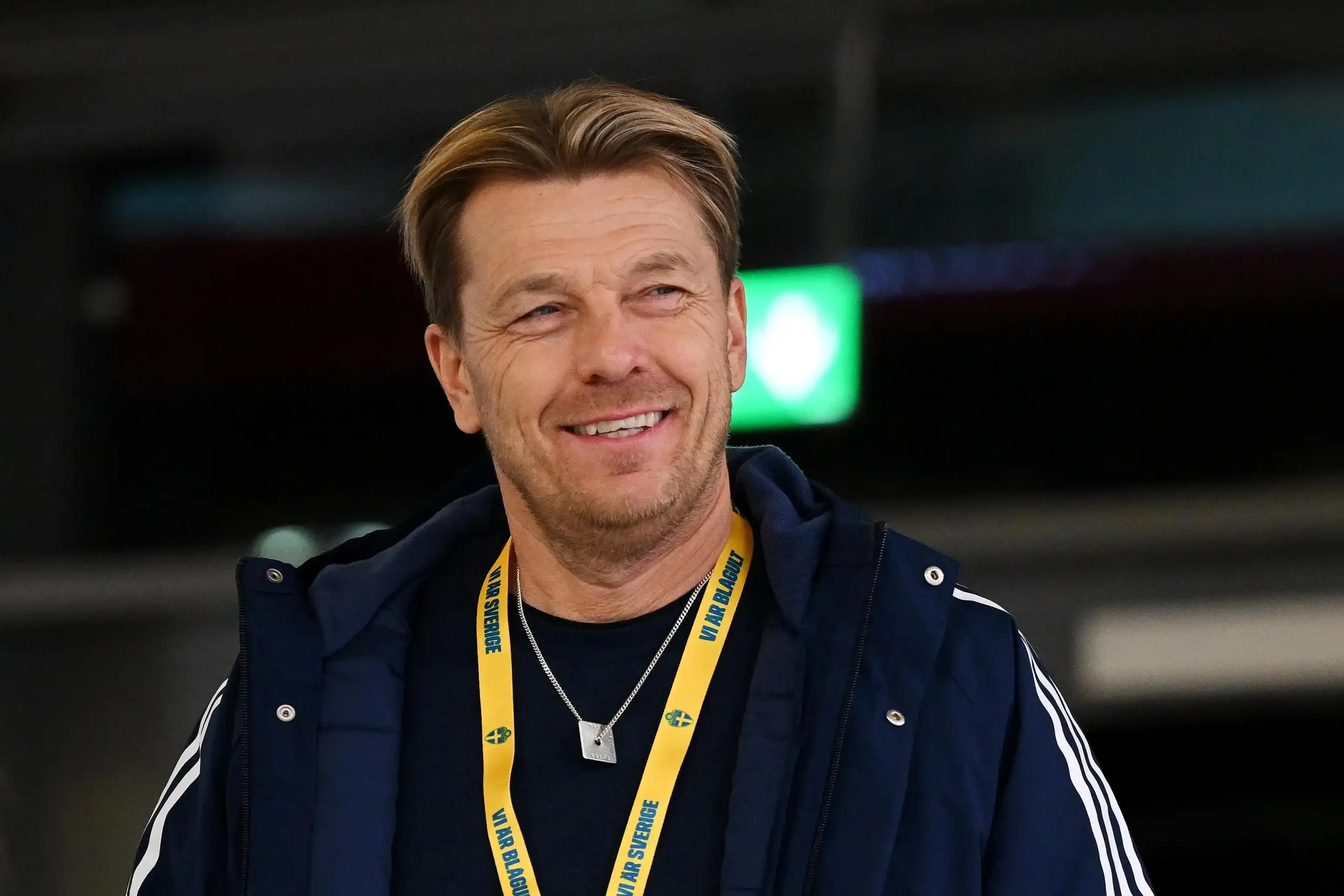
Tony Gustavsson knows what it takes to shape a title-contending team at the FIFA Women’s World Cup™.
At the 2015 and 2019 editions, he was assistant coach to USA boss Jill Ellis as the Stars and Stripes soared to back-to-back triumphs in Canada and France. By the 2023 tournament, he’d become Australia’s head coach and oversaw their unforgettable run to fourth place on home soil. The Matildas’ thrilling campaign, which enraptured the nation Down Under, concluded when they were beaten by Gustavsson’s native Sweden in the third-place play-off.
Three years on from that competition, Gustavsson is at the helm of his home country’s national team and is eyeing another tilt at the sport’s greatest prize.
Gustavsson, who took on the role following UEFA Women’s EURO 2025, revealed his deep pride on being given the responsibility of leading Sweden to the global finals.
“Ever since I started coaching 25 years ago, I had a dream to one day stand with the coaches, players and fans and sing the Swedish national anthem and be a head coach for the national team,” he told FIFA. “When I was offered a job, I didn’t hesitate for one second. You get this opportunity, if you’re lucky, once in your lifetime. I’m so privileged and honoured to represent my country, to work with these amazing leaders and players, and to connect with the fans as well.”
The Swedes’ Brazil 2027 qualification quest begins with an intriguing double-header of away clashes in Group A1. They will take on Italy on Tuesday before facing Serbia four days later.
Read on for our full interview with Gustavsson, who discusses Sweden’s key strengths, reveals why star striker Stina Blackstenius “personifies” the team, and reflects on his special experience at the last Women’s World Cup…
Tony Gustavsson: There’s a lot of energy, a lot of excitement. You can sense the vibe in the team that a World Cup qualification campaign is about to start. And obviously for us coaches, who have spent three months planning for this and haven’t seen the players for such a long time, we’re all excited too.
The first thing that comes to mind is togetherness. There’s a very strong team spirit, which has been built long before I arrived. There are generational players who have established that in the Swedish women’s national team for decades; what it means to represent the country, what it means to be part of this team.
Then if we think more football-specific, I think it’s the physicality we have. We have a mindset of defending aggressively and pressing with intensity. Then there’s the speed of transition, and Sweden is a very strong team on set-pieces, historically and also now.
What also makes me excited is that we lost almost 500 caps of experience over the last two rosters, but we have introduced a lot of debutants and young players, and showed we could still compete. We have that mix between experience and young, energising, upcoming players.
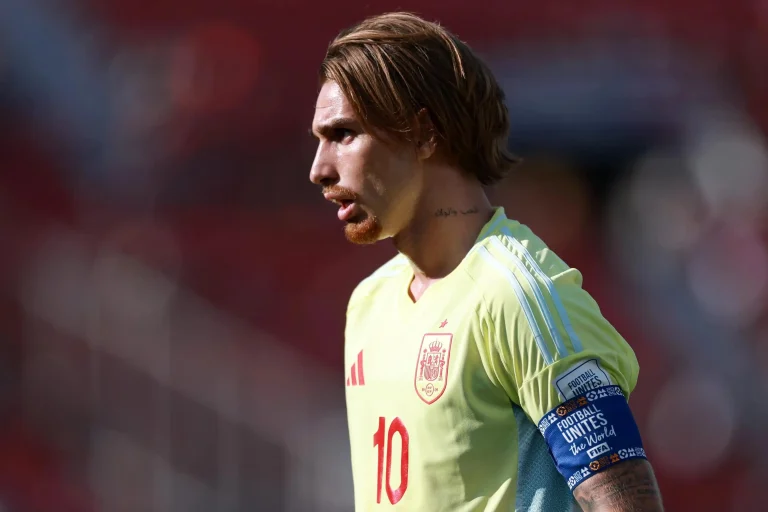
Stina is one of the players who personifies this team. She is a number nine, she is a goalscorer, she has experience of playing top games, but she still commits to defend like no-one else. The amount of pressure she puts on the opponents, winning the ball back, tracking back, putting pressure on the goalkeeper… I think when our number nine does that, everyone follows.
Well, if it’s a once-in-a-lifetime chance to coach your home country, I also think it might be only once in your lifetime you get [the] opportunity to coach a team that is hosting the World Cup. To see the growth of the game, the journey that women’s football had in that country, and to have the privilege of being a small part of that experience… It reminds you that football is more than 90 minutes on the pitch. It felt like something more than just a football tournament.
To see the stadium in Sydney packed with people and fully sold out in Australia’s opening match is obviously a massive memory. But you can’t look away from the penalty shootout against France in the quarter-finals [Australia won 7-6 after the shootout went to the 20th spot-kick]. That will be an emotional rollercoaster that I’ll never forget!
I had the privilege to be in the Olympics in 2016 in Brazil and I know how much that country breathes football. And I actually think it’s okay to dream and to visualise the World Cup now. You have to have that as a motivator and a drive. It’s easy to have the boring answer and say, ‘We need to qualify first, take one game at a time…’ As a coach, as a player, as a fan, you have to allow yourself to dream and smell and sense that World Cup, because that will motivate you to qualify.
That’s definitely what I hope for and what I dream of. And I know the players do the same and the fans do the same. I’ve always been a person that loves to compete. And I do not shy away from a challenge. I actually love tough challenges. We know the competition in the women’s game now is massive. A lot of teams can win it. We saw that in the last Euros, for example. But when we do compete, we’re going to compete the best we can. And I allow myself to dream.