
The FIFA World Cup 2026™ is groundbreaking in every sense of the word, particularly for teams from the Oceania region.
For the first time in the tournament’s history, the OFC was allocated a direct qualification berth, with New Zealand claiming the coveted spot in convincing fashion last March. Having punched their ticket to the North American showpiece, the All Whites discovered their group-stage fate in the Final Draw for the tournament, with Darren Bazeley’s charges set to line up alongside Belgium, Egypt and IR Iran in Group G.
Under the new 48-team format, in addition to being granted a direct qualification place, the region retained its play-off spot, meaning that a pair of OFC representatives could feature at the global extravaganza in what would be an unprecedented achievement.
After slipping to a
3-0 defeat to New Zealand in the final of the third round of the OFC preliminaries, New Caledonia are gearing up for a second shot at qualification via the FIFA Play-Off Tournament, in which they will do battle with Concacaf contenders Jamaica for the right to take on CAF representatives Congo DR in the final, with the winners progressing to the global bonanza.
Following the OFC’s formation in 1966, Oceania nations have had to navigate multiple pathways to the sport’s grandest stage. From 1986 until the recent adoption of that direct berth, that required teams to compete in intercontinental play-offs. Across those ten campaigns, the region’s final opponents have been drawn from either AFC, Concacaf, CONMEBOL or UEFA nations, with only Australia (in 2006) and New Zealand (2010) managing to successfully qualify.
FIFA takes a trip down memory lane to examine how the OFC nations have fared in play-off action.
A step too far
Before Australia swapped the OFC for the AFC in 2006, the Socceroos and New Zealand ruled the roost in continental qualifying, with Israel – who took part in the OFC preliminary competition for the 1986 and 1990 editions of the World Cup for geopolitical reasons – the only nation to have broken the duo’s stranglehold. Indeed, it wasn’t until the preliminaries for USA 1994 that OFC nations other than Australia, Fiji and New Zealand took part in a qualifying campaign.
While several nations have come agonisingly close to the promised land in numerous editions, others have ended in resounding defeats. On the road to Brazil 2014, that fate struck New Zealand, as they sunk to an 9-3 aggregate defeat at the hands of Mexico.
The OFC representatives were again left dreaming of what might have been in the play-offs for Korea/Japan 2002, in which the Australians faced off against Uruguay. Despite recording an encouraging 1-0 victory in front of over 84,000 fans in Melbourne, Frank Farina’s troops crumbled in the second leg, conceding three goals without reply at Montevideo’s Estadio Centenario.
Devastating defeats
New Caledonia will be bidding to bring an end to a run of three successive failures for OFC nations when they get their first taste of play-off action at the end of next month. All of those setbacks involved New Zealand, with their disappointing showing in the aforementioned clash with Mexico followed by defeats to Peru and Costa Rica in play-offs for the past two World Cup tournaments.
In the rumble to run out at Russia 2018, the All Whites pitted their wits against Peruvians, with whom they shared a scoreless stalemate in Wellington before coming up short in a 2-0 defeat in Lima. The Kiwis came even closer in their bid to bag a berth at the 2022 tournament, suffering a 1-0 reverse at the hands of Costa Rica in a one-off clash in Qatar.
However, when it comes to heartbreaking play-off campaigns, Australia have suffered more than most, with the 1990s proving to be particularly painful. As they vied to land a place at the 1994 edition on US soil, the Socceroos squared off against Argentina, who had finished runners-up at the previous World Cup, and they gave their illustrious opponents a massive scare.
The legendary Diego Maradona had even come out of international retirement to boost the Albiceleste’s chances. Although the South Americans drew first blood in the showdown in Sydney through Abel Balbo, Aurelio Vidmar hit back to secure a 1-1 draw, leaving things finely poised ahead of the second leg in Buenos Aires. A cruelly deflected Gabriel Batistuta cross looped over goalkeeper Robert Zabica to put paid to the Australians’ hopes as they came a whisker away from sending shockwaves through the global game.
Buoyed by that near miss, Vidmar and company headed into their intercontinental play-off showdown for France 1998 against IR Iran in fine fettle. The sides played out a 1-1 draw in Tehran before the hosts found themselves 2-0 up shortly after half-time in the return encounter, only for the Iranians to conjure up two quick-fire strikes in the 76th and 80th minutes to edge to victory on the away goals rule.
Play-off successes etched in OFC folklore
In their qualifying swansong as OFC members, Australia clinched a second World Cup appearance. In the intercontinental play-offs, the Socceroos were pitted against two-time champions Uruguay.
In the first leg at the Estadio Centenario, Dario Rodriguez’s header put Uruguay in the box seat. However, in the return leg, Guus Hiddink’s men hauled themselves level through Mark Bresciano’s smart finish. With no separating the sides, the rip-roaring encounter would be decided in a penalty shootout. Australian goalkeeper Mark Schwarzer proved to be the hero of the hour, saving spot-kicks from Rodriguez and Marcelo Zalayeta before John Aloisi capped off a magical night by firing home the winning penalty.
In qualifying for the 2010 World Cup, the Oceania region enjoyed a second consecutive
play-off success. With Australia now competing in the AFC ranks, continental heavyweights New Zealand comfortably qualified for the intercontinental play-offs for the global showpiece. This time, Bahrain – who were vying to secure a first taste of World Cup action – stood in their way.
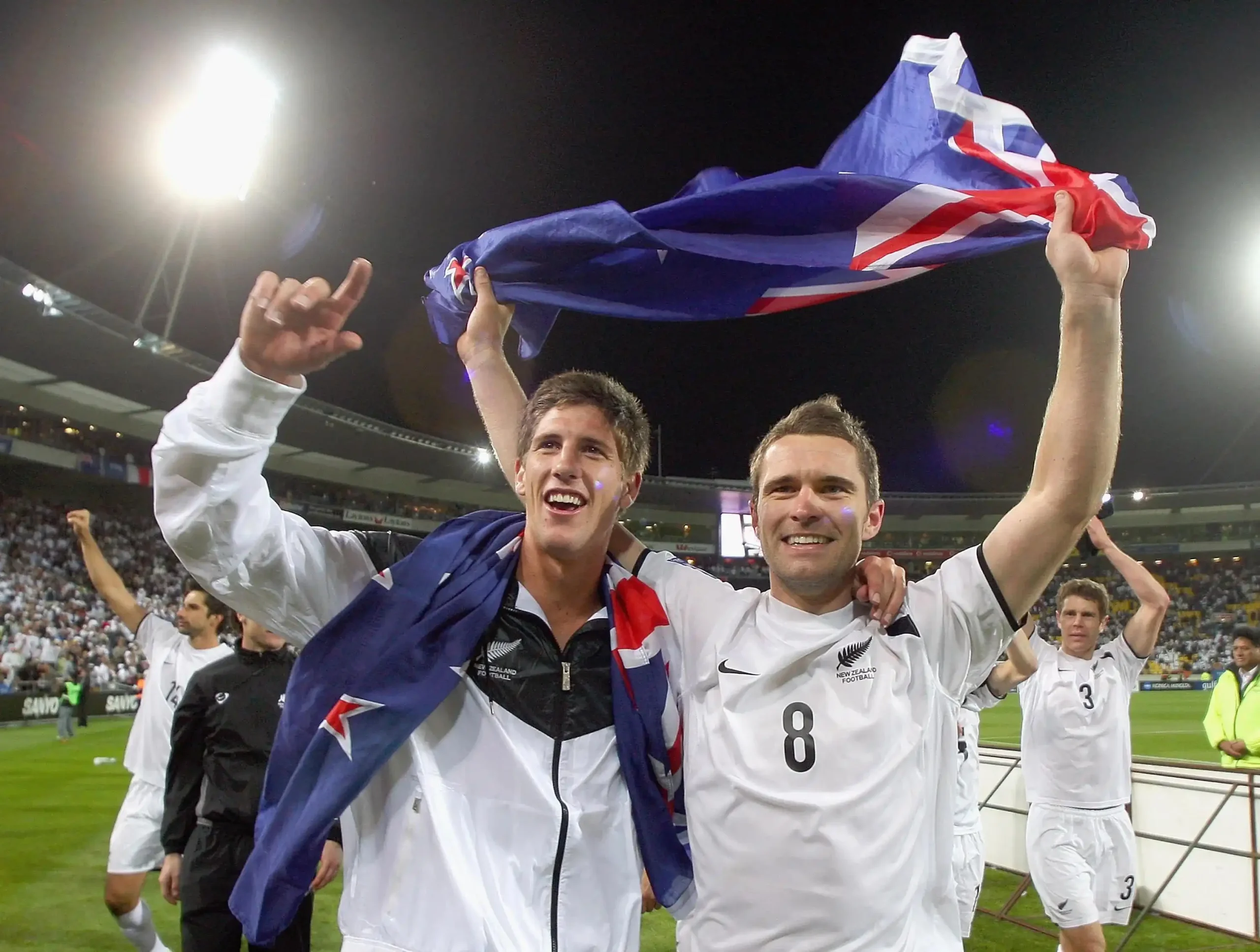
The well-drilled Kiwis earned a goalless draw in the first leg before showcasing some excellent game management in a 1-0 triumph back in Wellington, where Rory Fallon’s header clinched victory. The hosts had shot-stopper Mark Paston to thank for denying Sayed Mohamed Adnan a 52nd-minute leveller from the spot.
The All Whites displayed more of their defensive solidity when the action got under way on South African soil. However, despite drawing all three of their group-stage outings, they headed home early.