Curaçao’s qualification for their inaugural FIFA World Cup™ continues to amaze, as they became the smallest nation to reach the global showpiece, with a population of around 150,000, surpassing Iceland’s record from 2018.
On 5 December, the Blue Wave were drawn into Group E with Côte d’Ivoire, Ecuador and Germany at the FIFA World Cup 2026™ — and their much-anticipated debut will come on 14 June against four-time World Cup champions Germany at Houston Stadium.
Curaçao will be the 12th different Concacaf nation to participate in the World Cup and the fifth from the Caribbean region. FIFA takes a look back at the last 40 years to see how other Concacaf sides fared in their respective World Cup debuts.
Canada, 1986
With Concacaf heavyweights Mexico serving as hosts that year, the field was wide open to claim the region’s lone qualifying spot, and from the fray emerged Canada. Boasting a team largely comprised of players hailing from modest clubs around North America, Canada were drawn into Group C with reigning European champions France, plus Hungary and the Soviet Union.
Despite being in awe of illustrious opening match opponent France, Canada held their own and only succumbed on a 79th-minute goal from Jean-Pierre Papin. It was a similar story in the next two contests, but nevertheless 2-0 defeats to Hungary and the Soviet Union meant Canada completed their maiden World Cup without a point or a goal.
Costa Rica, 1990
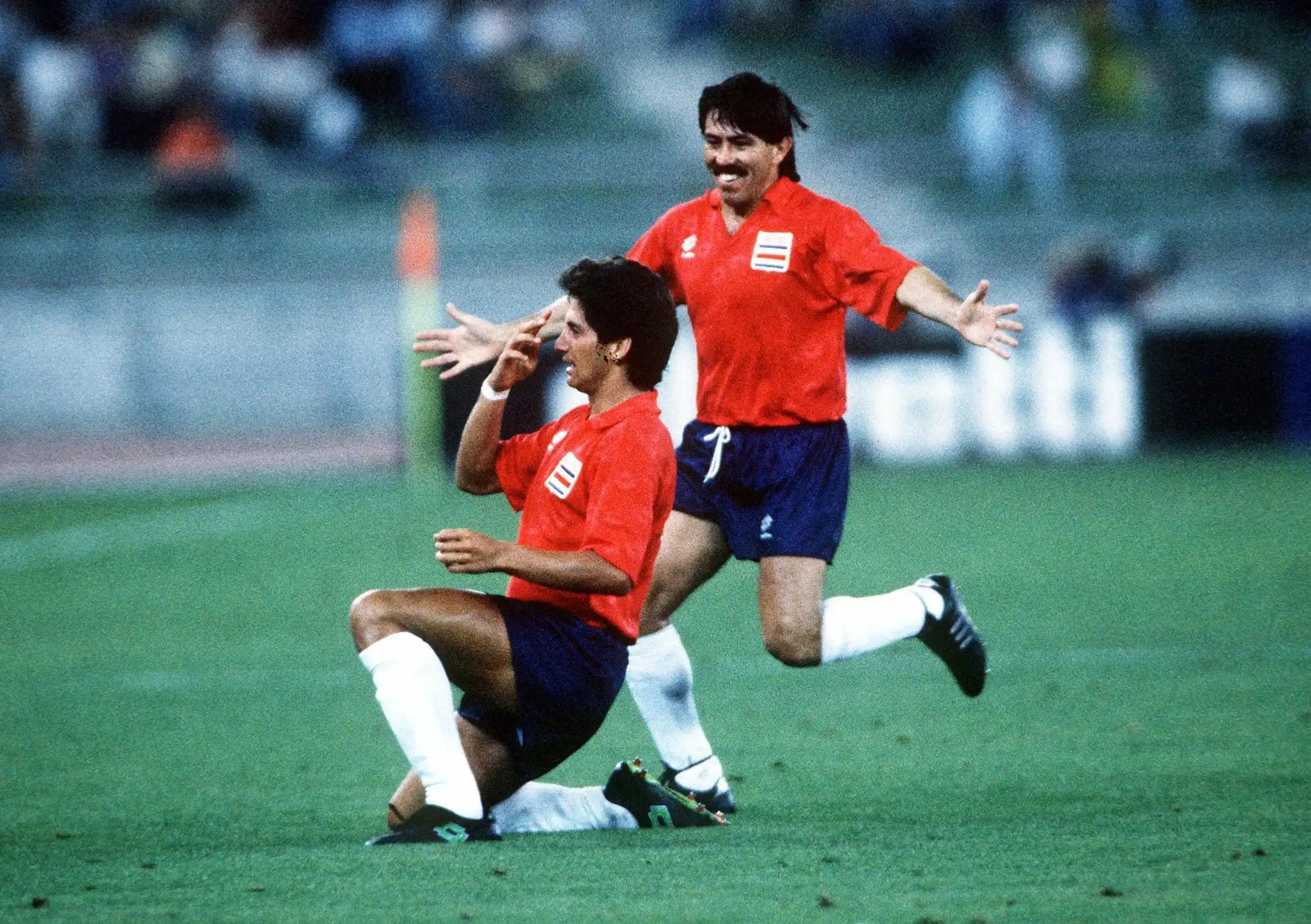
If Curaçao want to follow the path of any recent Concacaf debutant, it would be Costa Rica’s Group C campaign at Italy 1990. Los Ticos arrived on the World Cup scene with a splash, winning their first match 1-0 over Scotland through Juan Cayasso’s strike.
A narrow 1-0 loss to giants Brazil followed, but they would defy the odds and edge Sweden 2-1 via goals from Roger Flores and Hernan Medford to stun the world and reach the knockout rounds. While things came to an end in a 4-1 defeat to Czechoslovakia in the round of 16, Costa Rica in 1990 remains a north star for any Concacaf team debuting at the global showpiece.
Jamaica, 1998
With their colorful playing style and jerseys to match, the Reggae Boyz snapped a 24-year World Cup drought for the Caribbean by reaching France 1998, the first time that the tournament involved 32 teams. Jamaica were drawn into Group H with eventual podium-finishers Croatia, along with Argentina and Japan, and had a respectable opener, falling 3-1 to Croatia but getting their first World Cup goal through Robbie Earle.
A 5-0 defeat to Argentina proved disappointing, but Jamaica would rebound with aplomb, earning their first World Cup victory when they took down Japan, 2-1, thanks to a pair of goals from Theodore Whitmore.
Trinidad and Tobago, 2006
The Soca Warriors navigated their way past Bahrain in an intercontinental play-off to reach the World Cup and were promptly placed into Group B with England, Sweden and Paraguay. Their first match was highlighted by one of the finest goalkeeping displays in World Cup history, as Trinidad and Tobago No1 Shaka Hislop denied Zlatan Ibrahimovic and Sweden at every turn to earn the Caribbean side their first World Cup point in a scoreless draw.
They nearly did it again in the second outing against England, only to be felled by two late goals. Still alive to advance to the knockouts going into the finale against Paraguay, Trinidad and Tobago succumbed to the stubborn South Americans, 2-0, to leave Germany 2006 without a goal, but with plenty of admirers.
Panama, 2018
After cycles of torment and near-misses, the Central Americans finally enjoyed their qualifying breakthrough to reach Russia 2018, and would get drawn with eventual semi-finalists Belgium and England, along with Tunisia. While Panama kept things clean in the first half of their opener against Belgium, three second-half goals sealed a defeat.
England were to follow and it was a rough day at the office for the Panamanian defence in being hit for six, but there was the consolation of a first goal for Los Canaleros, with Felipe Baloy striking late to etch his name into the history books. Panama tacked on another goal in the finale against Tunisia via an own goal, but a 2-1 loss resulted in zero points from the three fixtures.