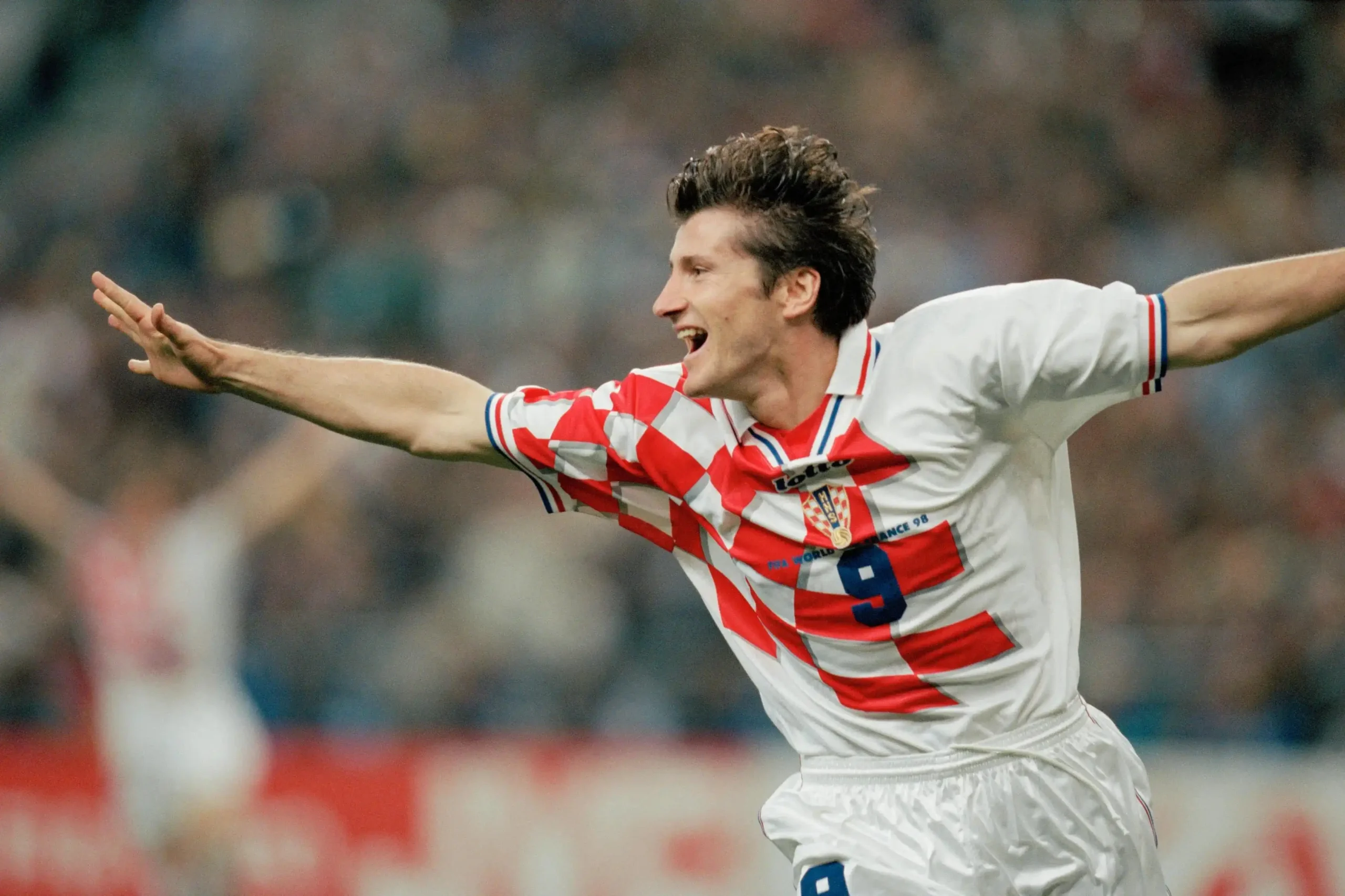
While Brazil’s Ronaldo lit up the 1998 FIFA World Cup France™ and the hosts lifted their first global title, one of the competition’s defining stories was undoubtedly Croatia’s remarkable run to the semi-finals and the dazzling displays of their potent poacher, Davor Suker.
The Vatreni virtuoso not only outscored serial sharpshooters in the shape of Argentina’s Gabriel Batistuta and Italian icon Christian Vieri to capture the adidas Golden Boot, but he also claimed the adidas Silver Ball as he etched his name firmly into tournament folklore. Twenty-eight years on from running opposition defences ragged at the global showpiece on French turf, the former forward spoke exclusively to FIFA about his exploits, offering an enlightening insight into each of his six tournament goals.
Suker: France 1998 is stitched into my soul
Group stage
Croatia 3-1 Jamaica
On the back of an impressive EURO 1996 campaign in which they graced the quarter-finals, the Croatians found themselves lining up at the global bonanza for the first time and pitting their wits against fellow debutants Jamaica in their curtain-raiser. After getting their noses in front courtesy of Mario Stanic’s close-range finish, Croatia could have easily allowed Robbie Earle’s headed equaliser to check their swaggering stride. Robert Prosinecki restored the Europeans’ advantage before a heavily deflected Suker strike put the contest to bed.
Suker: “We faced Jamaica in our World Cup debut, with the weight of history on our shoulders. Yes, the shot took a deflection, but strikers live by one rule: hit the target and ask questions later. I opened my body and struck it cleanly, low and true. The touch from the defender wrong-footed the keeper, but that’s part of the craft. When you shoot early, you create doubt. And when it went in, it was a pure release of emotions – not just joy, but relief. We weren’t just participating any more. We belonged. That goal was the final nail in the coffin: 3-1, game managed, statement made.”
Croatia 1-0 Japan
Miroslav Blazevic’s troops were kept at bay for much of their second encounter by a well-orchestrated Japanese defence. The bout looked destined to end in a scoreless stalemate, but Suker clearly hadn’t read the script. The lethal livewire claimed his second goal of the tournament to fire his country into the knockout stage with a match to spare.
Suker: “In our second game, I scored again. Technically, it was all about classic striker’s timing: reading the cross and attacking the space between the centre-back and full-back. There was no hesitation – one touch to control, one to finish: clinical. That goal secured our passage [to the knockout stage] before facing Argentina. Psychologically, it changed everything. You’re no longer fighting for survival, you’re chasing destiny. Was it more emotional than the first? Your first goal is like your first cap – untouchable. But this one carried weight. It told the world Croatia weren’t just there to make up the numbers.”
Round of 16
Croatia 1-0 Romania
The bleached blond Romanians paid the ultimate price for Gabriel Popescu’s rush of blood in his efforts to dispossess Aljosa Asanovic inside his own box. The referee adjudged that the Romanian midfielder had bundled his opposite number over, and awarded a penalty. Although Suker converted the spot kick, the official ruled that it would have to be retaken because his team-mate Zvonimir Boban was deemed to have encroached into the box. Undeterred, the prolific Croatian marksman kept his nerve second time round, picking the same side of the goal and planting his effort emphatically into the net.
Suker: “In the round of 16, it was a tight match – a real game of tactical chess. I was nervous when the referee signalled that I had to retake the penalty after Zvone Boban had entered the box too early. If I had missed the second attempt, he would have taken the blame. That’s why I told myself I simply had to score. I knew the Romanian goalkeeper, Bogdan Stelea, from La Liga. He was a quality keeper, but at that moment, it didn’t matter who was between the posts. If I’d had to take it ten times in a row, I’d have scored every single time. That’s how focused I was.”
Quarter-final
Croatia 3-0 Germany
The last-eight showdown offered Croatia a chance to exact revenge as they came up against a German side that had run out 2-1 winners at the same stage of EURO 1996. Reduced to ten men after Christian Worns was handed his marching orders for a reckless challenge on Suker, Die Nationalelf fell behind to Robert Jarni’s piledriver. Goran Vlaovic brought his side to the brink of achieving the unthinkable when he sent an arrowed effort flying past a helpless Andreas Kopke, before Croatia’s go-to goal-getter delivered the final blow with a right-footed effort that squirmed between the German custodian’s legs.
Duker: “In the quarter-final, we faced Germany – football heavyweights. Beating them 3-0 was pure footballing theatre. It was also my only right-footed goal [at the tournament]. Was that unusual? I was more confident with my left, but a striker has to be two-footed. In that moment, I saw the angle and trusted my instinct. There was no toying with the defence, just calmness among the chaos: a delay, a touch, a finish. When you make it 3-0 against Germany in a World Cup quarter-final, you don’t just celebrate a goal – you feel history shift beneath your boots. It’s my favourite goal because of the opposition, because of the stage and because it wasn’t just a goal, but a statement.”
Semi-final
France 2-1 Croatia
Just 25 seconds after the start of the second half, Suker sprung a flawed French offside trap before coming out on top in his one-on-one with Fabien Barthez to plunder his fifth goal of the tournament. The Real Madrid star’s joy proved to be short-lived, however, as Les Bleus gave their Croatians a dose of the blues just 65 seconds later through the most unexpected of sources in Lilian Thuram, who completed his brace in the 70th minute – his only two goals in national-team colours – to checkmate Croatian dreams.
Suker: “In the semi-final, we faced hosts France on their own turf, lifted by the noise of their fans until suddenly, there was silence. I scored to make it 1-0. The move worked because of the speed in transition: a chipped through-ball, a perfectly timed run and a finish across the keeper. It was textbook counter-attacking football. In that moment, I believed, I truly believed. We were 90 minutes away from the final. Do I have regrets? Football doesn’t let you rewind. When you lead a semi-final and it slips away, it stays with you, not as pain, but as fuel.”
Third-place play-off
Croatia 3-1 Netherlands
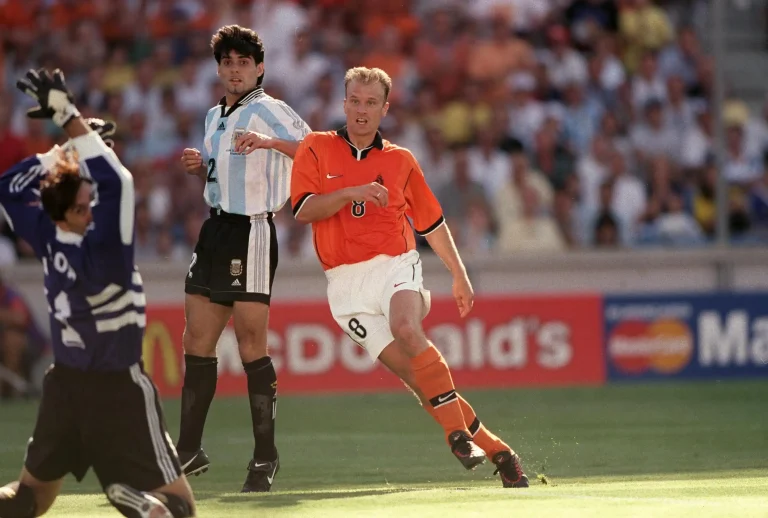
It was fitting that the final flourish of the Croatians’ remarkable campaign should serve up yet more goalscoring greatness from their talismanic target man. In a tussle for the final podium place, Prosinecki put the first-timers into the ascendancy, only for Boudewijn Zenden to conjure up a physics-defying equaliser. However, the Vatreni icon again proved to be the hero of the hour, finishing off a slick team move with aplomb to earn Croatia a World Cup medal in their first foray onto the global stage.
Suker: “In the third-place play-off, many teams switch off, but we didn’t. The move [for my goal] was fluid, built on sharp passing and intelligent movement. I attacked the space early and finished first-time. It was unstoppable – a striker’s reflex requiring no control, just conviction. When I look back on that goal and realise it secured Croatia’s first World Cup podium finish, I know it was about more than statistics. It is legacy. It is pride.”