“Maybe we are not considered the big favourite to win it, but we are a team that can surprise everybody.”
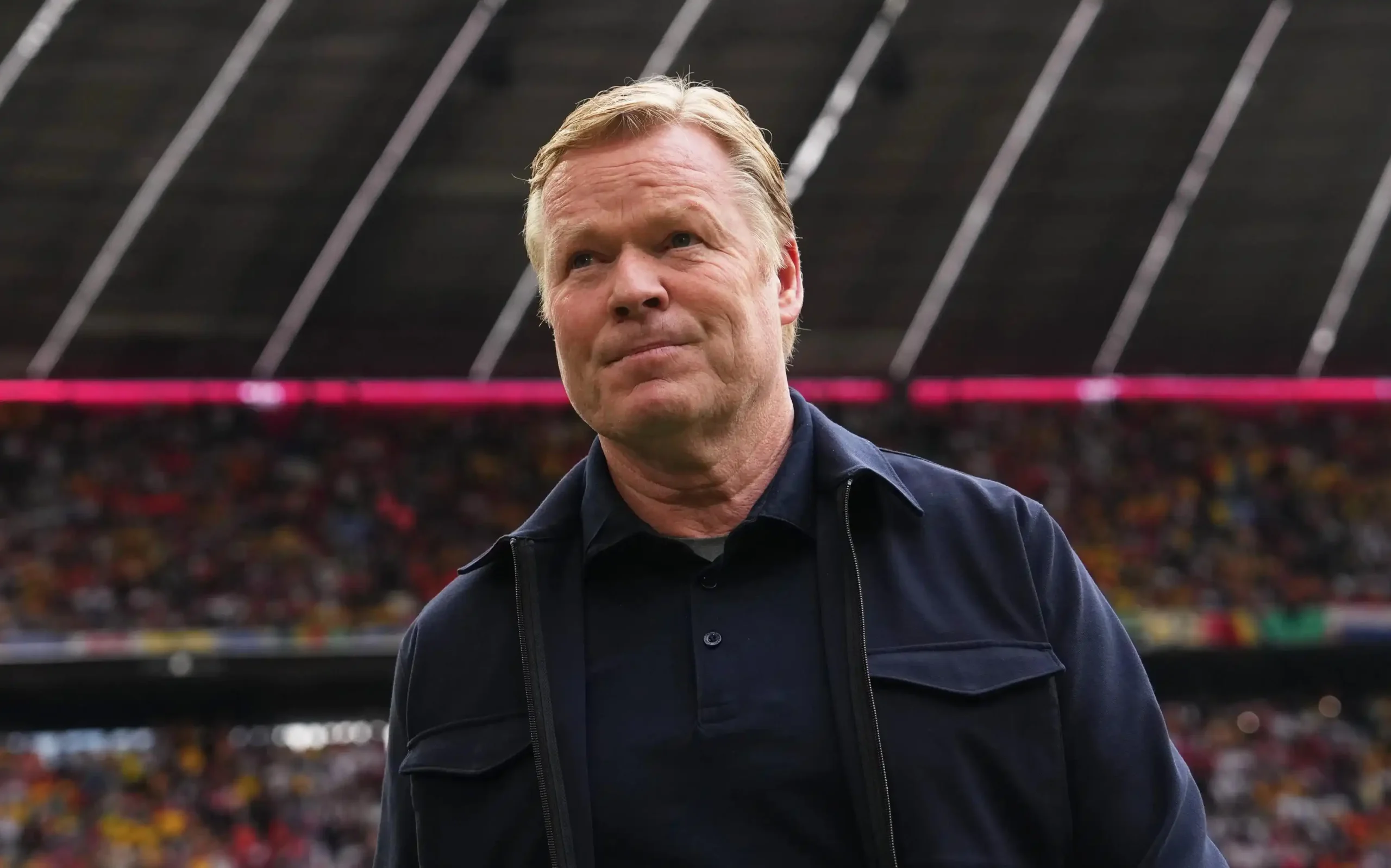
Ronald Koeman’s comment in an interview with FIFA is a good summary of the mood around his Dutch squad in the lead-up to the FIFA World Cup 2026™. He has at his disposal a team that are confident, allowing him to continue to inject more talent into the group.
After returning to the helm of the Oranje in 2023, Koeman turned to a formula that worked well during his first spell in charge, when he handed debuts to the likes of Frenkie de Jong and Matthijs de Ligt. This time round, young talents like Xavi Simons, Jeremie Frimpong and Micky van de Ven became regular features in his lineups, even in decisive UEFA Nations League matches and World Cup qualifiers.
“We have talents, like always in Holland, we have a lot of players doing well in the Premier League, for example. We are a really strong team,” emphasised the 62-year-old coach.
It is a strategy that has paid dividends: the Netherlands reached the semi-finals of the UEFA EURO 2024 and have re-established themselves as one of Europe’s most competitive teams on the international stage.
Those results also echo the rise that the team enjoyed when Koeman first took charge in 2018. Back then, they finished runners-up in the UEFA Nations League in 2019.
It is worth remembering that resurgence came off the back of a far more complicated period. The previous cycle, which saw the departures of stars like Arjen Robben and Robin van Persie, proved to be the most difficult period the Oranje had faced in more than three decades, as they failed to qualify for both the UEFA EURO 2016 and the 2018 FIFA World Cup™.
In 2020, Koeman left the national team for Barcelona, the club where he became a legend in the 1990s. He resumed his role with the Netherlands in 2022 following the departure of Louis van Gaal, who oversaw a strong World Cup campaign in Qatar where the Dutch took eventual winners Argentina to penalties in the quarter-finals.
In Catalonia, Koeman displayed his commitment to youth, no matter the situation. Barcelona themselves were in a period of transition, as they had to contend with it being Lionel Messi’s final season at the club, as well as the departure of Luis Suarez.
“We’re Dutch. We’re not afraid to involve young players – we’re used to it”, Koeman said on the Parlem de Futbol podcast. “I’ve always said that, if I have a 30-year-old and a 22-year-old playing at the same level, I’ll pick the 22-year-old because he’s the future.”
By introducing new faces and giving them responsibility, Koeman has ensured that the national team does not merely survive transitions, but grows stronger through them.
“I’ve always admired [Johan] Cruyff for his vision of the game and his desire to play attractive football, but I was a defender – I had to solve problems, and that influenced my ideas”, explained Koeman.
That philosophy has allowed the Netherlands to remain competitive against opponents with greater individual quality, without sacrificing the attacking identity that defines them.
The integration of Dutch prospects is also helped by the presence of two pillars in the team’s structure, one at each end of the pitch.
Captain Virgil van Dijk, 34, remains firmly in place to marshal the defence a decade after his first experience working with Koeman. The relationship between one of the best centre-backs of his generation and one of the greatest defenders of all-time began in 2015 when Van Dijk made his Premier League debut under Koeman at Southampton.
“Koeman gives us a sense of calm,” said Van Dijk after their EURO 2024 elimination. “He knows how to prepare a team for big matches. Having that experience to guide us is important. It really hurts to lose like that, but we stick together. We believe in Koeman and his staff.”
Up front, Memphis Depay has gained Koeman’s faith and gone on to become the Netherlands’ all-time leading goalscorer, often coming to the team’s rescue in the rare moments when they let their guard down.
One such instance came in a 3-2 qualifying win in Lithuania last September. Koeman’s side were 2-0 up at the interval but allowed the hosts to draw level. Depay then scored his second of the match 18 minutes into the second half to seal the win.
“I’m a bit frustrated,” said Koeman post-match. “We played with fire today. Fortunately, it didn’t cost us any points, but it could have been disastrous.
“We are glad to have [Depay] here. He scored two excellent goals and should be proud. We also have a history together. I supported him during a period when others maybe wouldn’t have, and he’s proven that he’s still, without a doubt, our best forward.”
Overall, Koeman’s satisfaction with his work, and with the squad, is clear to see, especially when off-field factors are taken into account.
“All [the players] arrive with a smile on their faces. Everyone’s happy to see each other again and to be able to speak Dutch”, he said on the TV programme De Avondetappe. “[Managing a more complex dressing room] is not something you want to focus on too much. Ideally, you just concentrate on the football side.”
That’s not to say there is no competition within the Dutch squad. The fusion of different generations forces Koeman into making difficult decisions when preparing for any match. In a 4-0 win over Finland in October, for instance, Tijjani Reijnders was left out of the midfield, with Justin Kluivert starting ahead of him.
“They’re choices. Difficult choices. Frenkie, Ryan [Gravenberch] and Tijjani could play in any position, and then a very good player ends up being on the bench”, said Koeman.
“Justin brings a different dynamic to the team and has slotted in well, but Tijjani can also play there, as can Xavi Simons,” he added. “I don’t have a preference. Look at Spain, for example – Dani Olmo sometimes sits on the bench because Pedri is playing.”
Given the amount of talent in their squad, the Netherlands will be heading to the World Cup with ambitions to shake things up. Koeman believes that emerging talent, combined with the leadership of his more senior players, can put the Oranje back on top of world football.