
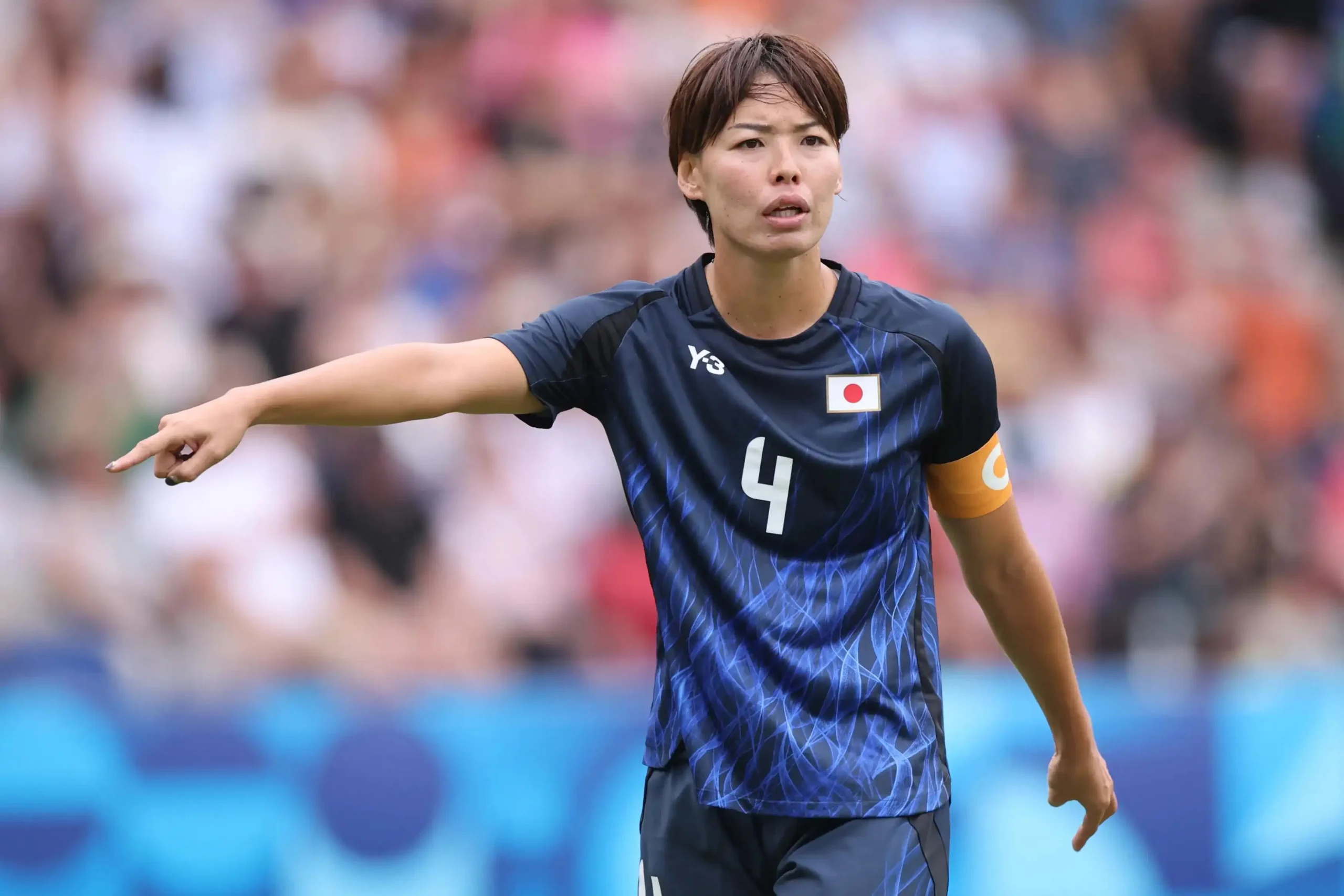
With the AFC Women’s Asian Cup kicking off next month – a tournament that also serves as Asia’s qualification pathway to the FIFA Women’s World Cup Brazil 2027™ – Saki Kumagai is preparing for her fifth appearance in the continental showpiece.
In 2011, Nadeshiko Japan reached the summit of world football, forever changing the trajectory of the women’s game in the country and redefining the aspirations of an entire generation. Kumagai was no exception. “Winning made me want to contribute even more to the national team,” she told FIFA. “That was what pushed me to move abroad.”
From the moment Japan lifted the trophy, a new challenge began. To keep winning with the national team meant becoming stronger individually. Kumagai changed her environment and went on to spend years competing at the highest level in Europe. Now, with time and experience behind her, her role has naturally evolved.
“In terms of age, experience and position within the team, many things have changed,” she said. “My commitment to my country hasn’t changed, but my role has evolved over time.”
Asked what distinguishes the current squad from those of the past, Kumagai points to the increase in opportunities to move abroad. “Today’s players all know what it’s like to play abroad, it’s nothing but positive,” she explained.
“The opponents we face with the national team aren’t Japanese. If you face them regularly at club level, you also understand how to compete against them. That makes a big difference.”
Now, this generation shaped by global experience turns its focus to the Asian Cup. “The Asian title is one we must win,” said Kumagai. “If we are aiming to win the World Cup, this is a tournament we can’t afford to lose.”
At the 12-team tournament, six direct places are on offer for Brazil 2027, with an additional two berths available via the Play-Off Tournament. That means that should Japan reach the semi-finals of the continental tournament, where their group features Vietnam, India and Chinese Taipei, they will be assured of a ticket to South America.
To reach the top once more, Kumagai says that Japan must go beyond tactics and talent and develop a winning habit. “In the past, we’ve played well in tournaments but didn’t win,” she said. “Recently, it’s not that we can’t compete at all. But the nations that win remain the same. The difference, I believe, is that winning mentality.”
In a tournament like the Women’s Asian Cup, matters will be settled by the finest of margins. Prevailing in tight matches, converting decisive chances and protecting narrow leads will be paramount. “If we can develop that extra edge, that habit of winning, our confidence will rise another level,” said Kumagai. “We’re still not there yet, but it’s the most important thing to get right.”
Conquering Asia would be another step toward that objective. Beyond the continental stage lies the global one once more. Should Kumagai return to the Women’s World Cup, it would mark her fifth appearance at the finals – a possible crowning chapter in an extraordinary career.
Asked whether ending her journey with another World Cup triumph would be the dream finale, she paused before answering with characteristic honesty.
“To have the choice of continuing or stepping away in that situation would be a special feeling,” said Kumagai. “It would mean everything. I don’t know if ‘dream’ is the right word, but winning is my biggest goal right now.”
She stood on top of the world at her first World Cup. To do so again at the end of her career would complete a remarkable circle, and one that would make Kumagai the happiest footballer in the world.