The moment Bolivia secured their spot at the FIFA World Cup 2026™ Play-Off Tournament was greeted with scenes of unbridled joy across the South American nation. It meant everything to Oscar Villegas’s charges, who harbour dreams of guiding the national team to FIFA’s flagship tournament following a 32-year absence.
The Bolivians bagged their berth at the intercontinental play-offs courtesy of their 1-0 triumph over Brazil in the final round of CONMEBOL qualifying last September. La Verde, who secured seventh spot in the standings, had a rather topsy-turvy time of things in the continental preliminaries, which they began with an ominous-looking four consecutive defeats.
Villegas’s troops ended with a tally of ten losses, six wins and two draws. However, that patchy record is now a mere footnote as the team gear up for the intercontinental play-offs that are set to take place in March, when they will square off against would-be World Cup first-timers Suriname in the semi-finals of Pathway 2, with Iraq awaiting the winners.
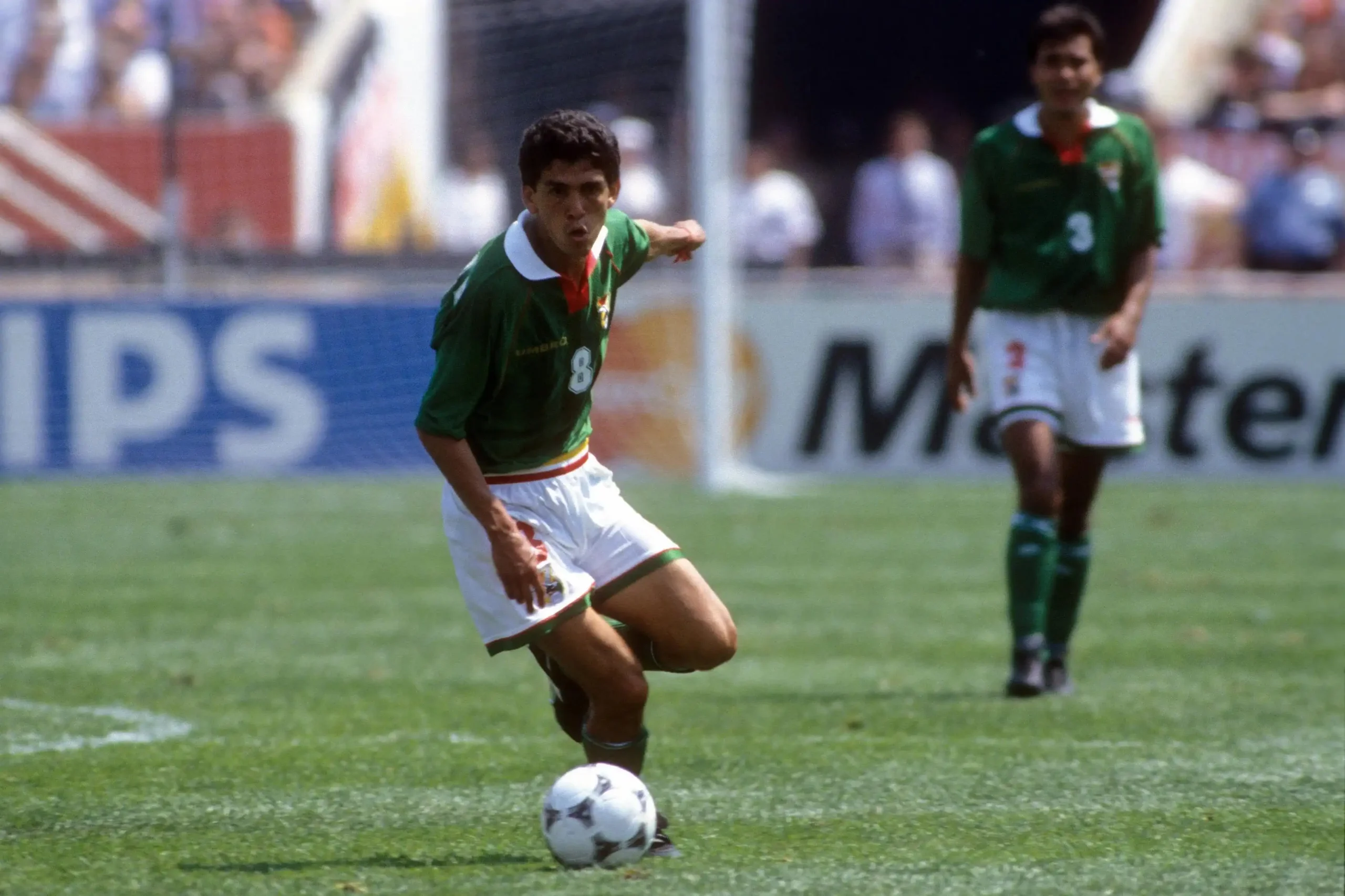
Reaching the play-off was cause for celebration not only for the country’s long-suffering supporters, but also for the erstwhile players who helped to lay the foundations of that success. Their legacy is embodied by figures such as Milton Melgar, a cornerstone of the squad that represented Bolivia at the 1994 World Cup, which was the last time the nation graced the greatest stage of all.
A side featuring the likes of Carlos Borja, Marco Etcheverry, Gustavo Quinteros and Marco Sandy gave a decent account of themselves in Group C, but failed to progress after suffering a 1-0 reverse to Germany, holding Korea Republic to a scoreless stalemate and slipping to a 3-1 loss at the hands of Spain.
Melgar, 66, sat down with FIFA to reflect on the significance of his generation’s exploits, Bolivia’s performance stateside from more than three decades ago and assess what qualification would mean this time around.
Milton Melgar: I think a lot of factors came together. Above all, there was a good blend of youth and experience in the squad. The youngsters we had in [qualifying in] 1993 had already played in the [CONMEBOL] Copa America and World Cup qualifiers. They had plenty of international appearances under their belts.
While all of that mattered enormously, strong leadership also proved decisive and having [Xabier] Azkargorta at the helm made all the difference. Our preparations involved a number of training camps, friendlies and get-togethers at high-performance centres in Europe. All of those elements were crucial in reaching our goal.
Sometimes you don’t manage to take it all in because the emotions are running so high when you’re out on the pitch, but I do remember things about that World Cup. When we faced Germany in the tournament opener in Chicago, everyone was swept up in a frenzy of excitement. As we ran onto the pitch, we could see a huge number of Bolivian flags. That was unexpected because it was the first time we’d qualified for a World Cup on merit. To kick the tournament off against the reigning world champions, of all teams, was amazing. We thought the stands would be full of German fans, but we were pleasantly surprised by the sea of Bolivian flags.
The truth is that we were rewarded for all the work we’d done in the build-up. We went toe to toe with everyone we came up against. We faced Germany, one of the giants of world football, and when I watch the match back, I think we more than held our own. I honestly have great memories of all three games because we were always looking to get on the front foot. We weren’t the Bolivian side that everyone was expecting to go there and sit back or just make up the numbers.
If we make it to the World Cup, an entire generation of young Bolivians will benefit from the invaluable experience it would provide. In any case, as I’ve always said since I started out in the game, Bolivia have never been favourites. There have been very few matches, and only brief spells in them, when we could realistically have been considered anyone’s choice to win. We can’t take anything for granted in the play-offs, so we have to work hard, approach the competition with humility and give every last ounce.
Rather than focusing on the legacy, I think that if we make it to the World Cup, we have to seize the opportunity from both an economic and sporting perspective and use that momentum as a springboard to develop our players for future World Cups and qualifying campaigns. That’s the key. The real legacy would be the example set by these young players, whose efforts could become a powerful source of motivation for the nation’s up‑and‑coming talent.