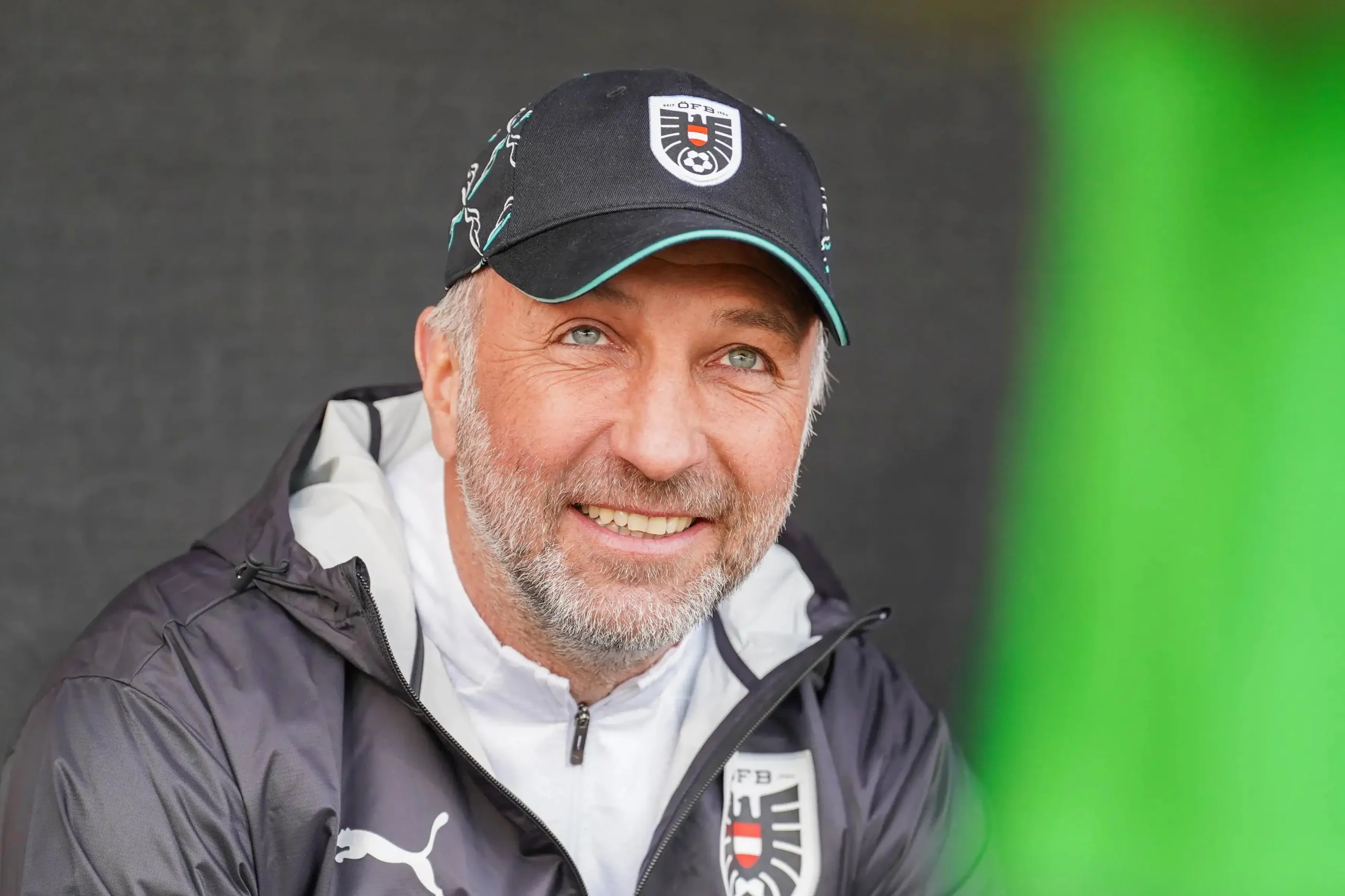
Alexander Schriebl has spent the past few weeks watching games, preparing and analysing. With the European qualifiers for the FIFA Women’s World Cup Brazil 2027™ due to get underway, Austria’s national coach can finally turn his attention to what he enjoys most – working with the players.
Schriebl took charge of the side in January 2025. His first year in the role was marked by injuries and the search for the perfect blend of youth and experience. Speaking with FIFA, he reflects on his team’s progress and assesses their chances of reaching a first-ever Women’s World Cup via a qualifying group that includes Germany, Norway and Slovenia.
Whichever nation tops that group will secure one of the 11 direct slots available to UEFA nations while the remaining three nations will then enter the play-off phase.
Alexander Schriebl: I was very excited about the job but there was also some trepidation. You’re correct that this is my first time working in this kind of environment and it’s very different from club football. I managed to settle in quickly though, and I’m really enjoying it so far.
First of all, we speak a lot over the phone, including with the players. We do a lot of travelling to watch games in the Austrian league, but also in Germany and England. It’s important to see the players face-to-face. We watch lots of games and videos, and discuss our plans for the future.
Definitely working with the players! The level is really high and it’s great to see what they can do. I enjoy it a lot.
We’ve had a lot of injury problems over the past year, which set us back a bit. Unfortunately, we suffered a spate of injuries, some of them serious, before the play-off matches. That deprived us of a lot of experienced players in the form of Manuela Zinsberger, Sarah Zadrazil, Marie Hobinger and Lilli Purtscheller. We certainly would have benefitted from Manuela and Sarah’s experience. We’re trying to find the right balance but the style of play is more important than a player’s age.
That’s a tough question! Probably seven to ten countries have a chance of winning the tournament, if all goes according to plan. That includes the top European nations and, of course, the USA. Australia could also be a contender if they have a good tournament.
That’s right. All the teams that qualify automatically are likely to also be contenders for at least a semi-final spot. We’re fine with that; realistically, we expect to have to qualify through the play-offs. We have tough opponents in Germany and Norway, and Slovenia have also improved a lot. It will be intriguing to see which team from England and Spain’s group will have to qualify via the play-offs. In any case, I think it’s safe to assume that both countries will be at the World Cup. So, it will likely be very difficult to make it through against either of them in the play-offs.
That is the dream for all of us. This is the seventh attempt, so we would love to do it, but it’s also clear that we will need to beat at least one or two opponents who are at least as good as us. The players all share this dream and they want to make it a reality.
They are a very strong side. We saw at the European Championship how athletic they are as a team. We have also experienced that first-hand. I see Germany as a potential winner of every tournament. They have some fantastic individual players and are also a very well-organised unit. Plus, they have an outstanding goalkeeper [Ann-Katrin Berger] who I think is very impressive.
Norway are a top side with some exceptional attacking talent. They are also very solid in the way they set up. They’re an intelligent team and they will be difficult to beat. Slovenia have really improved, too. Until recently, they were still in Group C [in the Women’s Nations League], but now they’ve been promoted to Group A. It’s a huge challenge, but we believe that we are up to it.
Photos courtesy of ÖFB/Paul Gruber