Whether Saeed Al Owairan’s wonder goal at USA 1994, Park Jisung’s heroics during Korea Republic’s semi-final run in 2002, or Mehdi Taremi’s brace against England at Qatar 2022, Asian players have etched unforgettable moments into FIFA World Cup™ history.
These icons have seized their opportunities, pushing the boundaries of what Asian stars can achieve on the world’s biggest stage. Today, Asian players enter the FIFA World Cup 2026™ in a far more competitive context than in previous decades. This shift is fuelled by their growing presence in Europe’s elite leagues, where they hold pivotal tactical and leadership roles. The upcoming edition in North America, the largest in history with 48 teams, provides an even greater platform for this evolution, bolstered by the continent’s increased allocation.
Eight Asian sides have already secured their places: Korea Republic, Qatar, Australia, Japan, IR Iran, Saudi Arabia, Jordan and Uzbekistan, while Iraq could still join them via the FIFA World Cup 2026™ Play-Off Tournament. Against the backdrop of this expanded continental presence, FIFA highlights 10 players tipped to make a major impact across Canada, Mexico and the USA.
Musa Al Taamari, Jordan
Jordan’s meteoric rise over the last two years would not have been possible without Al Taamari. The Rennes forward is the linchpin of the Nashama attack and the man carrying the nation’s hopes of making history in North America. Having inspired Jordan to their first World Cup qualification, Al Tamari spearheaded the campaign with seven goals and two assists during the Asian qualifiers. His influence was equally vital at the AFC Asian Cup 2024, where he propelled the national team to a historic maiden final.
The 28-year-old winger is defined by his blistering pace, technical flair, and clinical long-range finishing, as evidenced by his recent strike against Paris Saint-Germain. Al-Tamari has established himself as a key figure for Rennes, racking up 10 goal involvements since the start of the campaign.
Akram Afif, Qatar
The two-time AFC Player of the Year (2019, 2023) is an essential inclusion in this list. The 29-year-old has been the driving force behind Qatar’s qualifying campaign, contributing to a staggering 19 goals. His two assists in the 2-1 victory over the United Arab Emirates in the fourth round secured Al Annabi’s place at the global finals for the second time in their history, and their first-ever successful qualification via the AFC preliminaries.
To grasp Afif’s impact on the national team, one need only look at his role in Qatar’s successful AFC Asian Cup title defence in early 2024. The forward netted eight goals in six matches, including a historic hat-trick in the final against Jordan. At club level, the Al Sadd winger continues to dazzle both domestically and continentally, racking up 24 goal involvements in as many appearances since the start of the campaign.
Salem Al Dawsari, Saudi Arabia
Despite an influx of world-class talent over the past two years, Al Dawsari remains the undisputed cornerstone of Al-Hilal’s attack. A natural leader and captain, the 34-year-old’s enduring influence is testament to his immense talent and elite technical ability. He proved his worth once again at the FIFA Club World Cup 2025™, playing a pivotal role in Al Hilal’s qualification for the knockout stages before an unfortunate injury ruled him out of the round of 16 and quarter-final clashes.
Al Dawsari is Saudi Arabia’s joint-all-time leading scorer at the FIFA World Cup with three goals, most famously netting the iconic winner against Argentina at Qatar 2022. Despite not playing as a traditional centre-forward, he has amassed 25 goals for the Green Falcons throughout his international career. His enduring excellence was recently recognised when he was crowned AFC Player of the Year for 2025.
Son Heungmin, Korea Republic
The former Tottenham Hotspur forward and current LAFC star needs no introduction. Despite being 33, and with Korea Republic boasting several stars in the world’s elite leagues, Son remains the undisputed focal point for the national team. A historic milestone beckons, with Son just four goals away from equalling Cha Bumkun’s all-time record of 58 international goals. World Cup 2026 could well be the stage where he cements his legacy.
After a glittering ten-season spell with Spurs, where he netted 137 goals, Son opted for a new challenge in Major League Soccer (MLS) in Los Angeles. It is a move that could prove pivotal in helping him adapt to North American conditions ahead of the upcoming finals. Since his arrival, Son has netted 13 goals and provided five assists in just 15 appearances, proving that his world-class influence remains undiminished despite his new surroundings.
Lee Kangin, Korea Republic
With five goals and six assists in the qualifiers, Lee played a pivotal role in securing Korea Republic’s place at the World Cup. However, measuring what the Paris Saint-Germain star offers in numbers alone does not tell the full story. The 25-year-old’s true value lies in his tactical flexibility and ability to fulfil multiple roles, combined with his capacity to link midfield and attack with seamless precision.
While head coach Hong Myungbo deployed him regularly on the right wing throughout 2025, Lee’s high tactical intelligence grants him significant freedom to drift inside and rotate positions with his teammates. This same versatility allows PSG coach Luis Enrique to utilise him frequently as a playmaker, and occasionally as a ‘false nine,’ in addition to his effectiveness on the right flank when required.
Mehdi Taremi, IR Iran
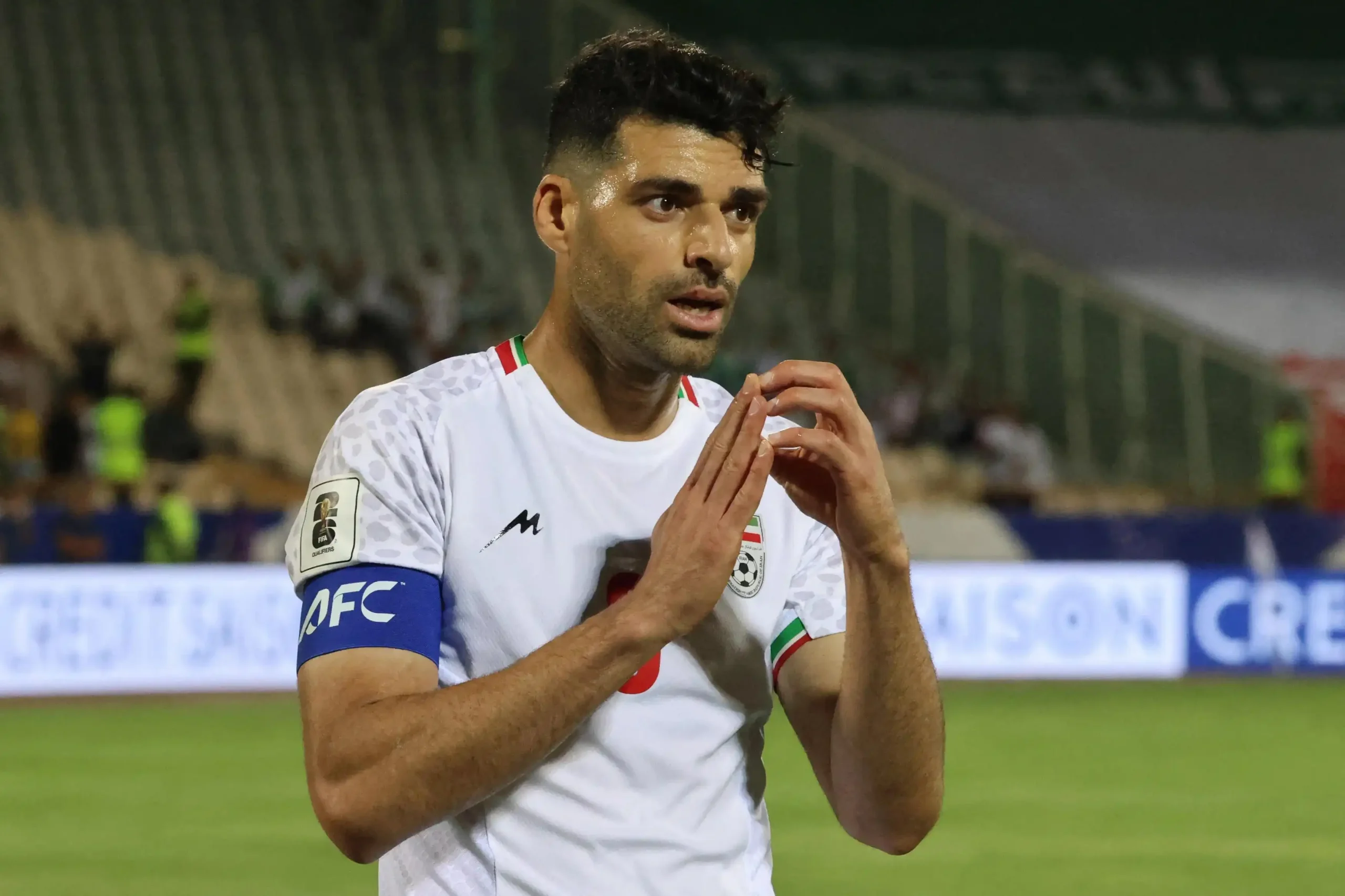
No player exerted as much attacking influence in the Asian qualifiers as Taremi. The current Olympiacos forward and former Inter Milan man was the standout figure in Iran’s qualifying campaign, netting ten goals and providing a further eight assists. This impact comes as no surprise. At Qatar 2022, Taremi bagged a brace against England before setting up the winner against Wales in the group stage, cementing his reputation as a big-game player.
Despite moving on from his spell in Italy, the 33-year-old continues to post remarkable numbers, having racked up 21 goal involvements in 26 appearances for Olympiacos across all competitions this season. His wealth of experience, clinical instinct, and intelligent movement both inside and outside the box make him the undisputed reference point for Team Melli in what could be his final World Cup.
Ayase Ueda, Japan
The 27-year-old forward is a key factor in making Japan’s impressive system so effective in the final third, a point underlined by his eight goals in the qualifiers, scored in just 809 minutes on the pitch. As a result, he has established himself as coach Hajime Moriyasu’s primary attacking option, despite the depth and quality of this current Japanese generation.
At Feyenoord, Ueda has added a new dimension to his game. Under Robin van Persie, he has cemented his place as the club’s key striker, and is the top scorer in the Dutch league, with 18 goals. His agility, pace, and intelligent playing off the shoulder of defenders, combined with his aerial prowess, make him a dynamic forward perfectly suited to the modern game.
Takefusa Kubo, Japan
If Ueda is the one who finishes the move, Kubo is the one who dictates its tempo. The 24-year-old burst onto the global scene at an early age, honing his craft at Barcelona’s famed La Masia academy. After returning to Japan, a series of impressive performances caught the eye of Real Madrid, who secured his services when he was just 18. Following several loan spells across La Liga, Kubo found stability at Real Sociedad, where the club invested approximately seven million euros to make his move permanent.
With his blistering pace, agility, and trademark ability to drift inside from the right wing, Kubo has established himself as one of La Liga’s standout performers in recent years. He remains a cornerstone of a Japanese national team aiming to make a significant impact in North America. Although he went without a goal or assist in his two appearances at Qatar 2022, Kubo returns as a far more mature and physically complete player. He is undoubtedly one of the Asian stars set to command the most attention at the upcoming tournament.
Eldor Shomurodov, Uzbekistan
Shomurodov heads into the World Cup as Uzbekistan’s all-time leading scorer with 43 goals. The talismanic forward inspired his nation to their historic first-ever qualification, leading the charge with five goals and four assists during the Asian qualifiers. Leading the line, Shomurodov provides Uzbekistan with a formidable focal point in the final third. Standing at 1.90m, his imposing physical presence makes him a constant threat in the box, whether attacking high crosses or low deliveries.
His time in Europe has added a vital competitive edge to his game. A high-profile 19 million euro move to Roma in the summer of 2021 marked a landmark moment in his career. During three seasons in the Italian capital, punctuated by loan spells with Spezia and Cagliari, he netted 13 goals while further refining his tactical intelligence. Last summer, Shomurodov returned to Istanbul Basaksehir, where he has reaffirmed his clinical form with 17 goals across all competitions this season. He heads into the finals with significant scoring momentum and his veteran experience could prove decisive in Uzbekistan’s global debut.
Jordan Bos, Australia
In Tony Popovic’s tactical setup, the left flank is a vital transition point between defence and attack, and it is here that Bos has emerged as a pivotal figure. The 23-year-old left-back has earned 23 international appearances, netting twice and providing two assists. He offers the national team added tactical flexibility, excelling as a wing-back when shifting to a back-three system.
During his tenure at Feyenoord, Bos has evolved into a vital asset in building play from the back. He is renowned for his composure under pressure and his ability to break the opposition’s first line of defence, complimented by his pinpoint crossing and a clinical eye for goal from distance. This blend of composure in possession, attacking drive and defensive prowess offers Australia an added dimension on the left flank, establishing Bos as a player primed to leave his mark on the World Cup.